Author: TouristicHub.com

  • Rashtrapati Bhavan Travel Guide : History, Gardens, Museum & Visitor Tips ✨

    Rashtrapati Bhavan Travel Guide : History, Gardens, Museum & Visitor Tips ✨

    Explore India’s Most Iconic Presidential Residence

    Standing proudly in the heart of New Delhi, Rashtrapati Bhavan is more than just the official residence of the President of India—it is a symbol of democracy, heritage, and architectural brilliance. Rashtrapati Bhavan continues to attract travelers, history lovers, photographers, and architecture enthusiasts from around the world.

    From its grand Mughal Gardens (now Amrit Udyan) to the fascinating Rashtrapati Bhavan Museum, this guide covers everything you need to know before visiting—history, best time, tickets, how to reach, dress code, safety, and insider tips. 🏛️🌸


    📌 Table of Contents

    1. Why Visit Rashtrapati Bhavan
    2. History of Rashtrapati Bhavan
    3. Architecture & Design Highlights
    4. Rashtrapati Bhavan Gardens (Amrit Udyan)
    5. Rashtrapati Bhavan Museum
    6. Best Time to Visit
    7. How to Reach Rashtrapati Bhavan
    8. Entry Tickets & Booking Process
    9. Visitor Rules, Dress Code & Safety
    10. Suggested Half-Day Itinerary
    11. FAQs
    12. Explore More India Travel Guides

    🌟 Why Visit Rashtrapati Bhavan

    ✔ A Symbol of Indian Democracy

    It is the official residence of the President of India, representing the country’s constitutional strength.

    ✔ Stunning Architecture

    Designed by Sir Edwin Lutyens, Rashtrapati Bhavan blends:

    • Indian architectural elements
    • European classical design
    • Mughal garden planning

    ✔ Beautiful Seasonal Gardens

    The famous Amrit Udyan opens annually and attracts thousands of visitors.

    ✔ Rich Cultural Experience

    From royal halls to presidential memorabilia, every corner tells a story.


    🏛️ History of Rashtrapati Bhavan

    Originally built as the Viceroy’s House during British rule, Rashtrapati Bhavan was completed in 1929. After India gained independence in 1947, it became the residence of the President of India.

    Key historical facts:

    • Architect: Sir Edwin Lutyens
    • Construction period: 1912–1929
    • Total rooms: 340+
    • Estate size: 330 acres

    It stands at the western end of Rajpath (Kartavya Path), facing India Gate.


    🏗️ Architecture & Design Highlights

    Rashtrapati Bhavan is considered one of the largest presidential residences in the world.

    🔹 Architectural Features

    • Massive sandstone structure
    • Central dome inspired by Buddhist stupas
    • Colonnades and grand staircases
    • Intricate jaali work

    🔹 Famous Halls Inside

    • Durbar Hall – ceremonial functions
    • Ashoka Hall – once a ballroom, now used for state events

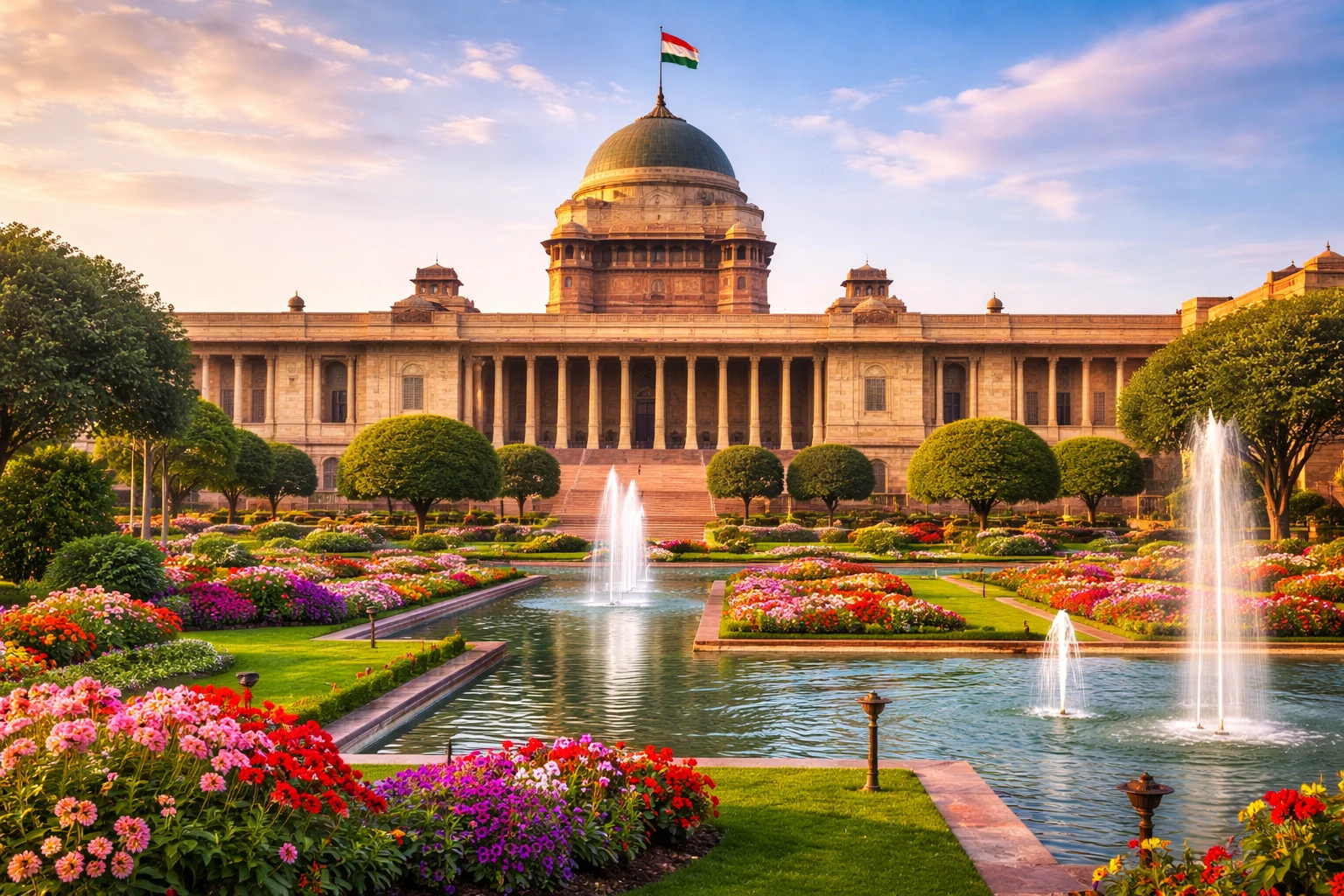
    🌸 Rashtrapati Bhavan Gardens (Amrit Udyan)

    Formerly known as Mughal Gardens, Amrit Udyan is one of the most beautiful public gardens in India.

    🌼 What You’ll See

    • Rose gardens (thousands of varieties)
    • Tulip beds
    • Bonsai garden
    • Herbal and spiritual gardens

    🗓️ Garden Opening Season

    • Usually February to March
    • Entry is free, but prior booking is required

    This is the most photographed part of Rashtrapati Bhavan. 📸


    🖼️ Rashtrapati Bhavan Museum

    The Rashtrapati Bhavan Museum offers deep insight into:

    • India’s Presidents
    • Freedom movement
    • Presidential gifts from foreign leaders

    🏛️ Museum Zones

    • Clock Tower
    • Stables (converted gallery)
    • Garages (modern exhibits)

    A must-visit for history lovers and students.


    🗓️ Best Time to Visit Rashtrapati Bhavan

    ✔ Best Months

    • October to March – pleasant weather
    • February–March – Amrit Udyan open

    ❌ Avoid

    • Peak summer (May–June)
    • Rainy days during monsoon

    🚇 How to Reach Rashtrapati Bhavan

    📍 Location

    New Delhi, India

    🚆 By Metro

    • Central Secretariat Metro Station (Yellow & Violet Line)
    • 15–20 minutes walk

    🚕 By Taxi / Cab

    Ola, Uber, and local taxis are easily available.

    🚶 By Walking

    Ideal if visiting India Gate and Kartavya Path nearby.


    🎟️ Entry Tickets & Booking Process

    ✔ Online Booking (Mandatory)

    • Official website: rashtrapatisachivalaya.gov.in
    • ID proof required

    🎫 Ticket Prices (Approx.)

    • Gardens: Free
    • Museum: ₹50–₹100 (subject to change)

    Visitors must carry the same ID used during booking.


    👗 Visitor Rules, Dress Code & Safety

    ✔ Dress Code

    • Decent, modest clothing
    • No shorts or sleeveless tops recommended

    ✔ Security Rules

    • Strict security checks
    • No food items
    • Limited photography zones
    • Mobile phones allowed (museum rules may vary)

    ✔ Safety

    Extremely safe with high-level security presence.


    🗺️ Suggested Half-Day Itinerary

    Morning (9:00 AM – 12:30 PM):

    • Entry to Rashtrapati Bhavan complex
    • Visit Rashtrapati Bhavan Museum

    Afternoon (1:00 PM – 3:00 PM):

    • Walk through Amrit Udyan (seasonal)
    • Photography and relaxation

    Evening:

    • Visit India Gate
    • Explore Kartavya Path

    ❓ FAQs

    1. Can tourists visit Rashtrapati Bhavan?

    Yes, Indian and foreign tourists can visit with prior online booking.

    2. Is photography allowed?

    Photography is allowed in designated areas only.

    3. How much time is required?

    2–4 hours is ideal.

    4. Is Rashtrapati Bhavan open all year?

    Museum is open most of the year; gardens are seasonal.

    5. Is it suitable for children?

    Yes, educational and family-friendly.


    🌍 Explore More India Travel Guides

    If you enjoyed learning about Rashtrapati Bhavan, you may also love exploring India’s cultural and historical landmarks in our Ultimate Guide to Hidden Gem Destinations Around the World.

    Travelers interested in heritage and architecture often explore our Lesser-Known Places in India Guide, while budget travelers enjoy our Ultimate Budget Hidden Gems Under $50/Day Worldwide.

    These guides help you plan meaningful, affordable, and culturally rich journeys.
  • 🛍️ Sarojini Market Travel Guide: Best Shopping Tips, Timings & Bargain Hacks ✨

    🛍️ Sarojini Market Travel Guide: Best Shopping Tips, Timings & Bargain Hacks ✨

    Delhi’s Most Famous Budget Shopping Paradise

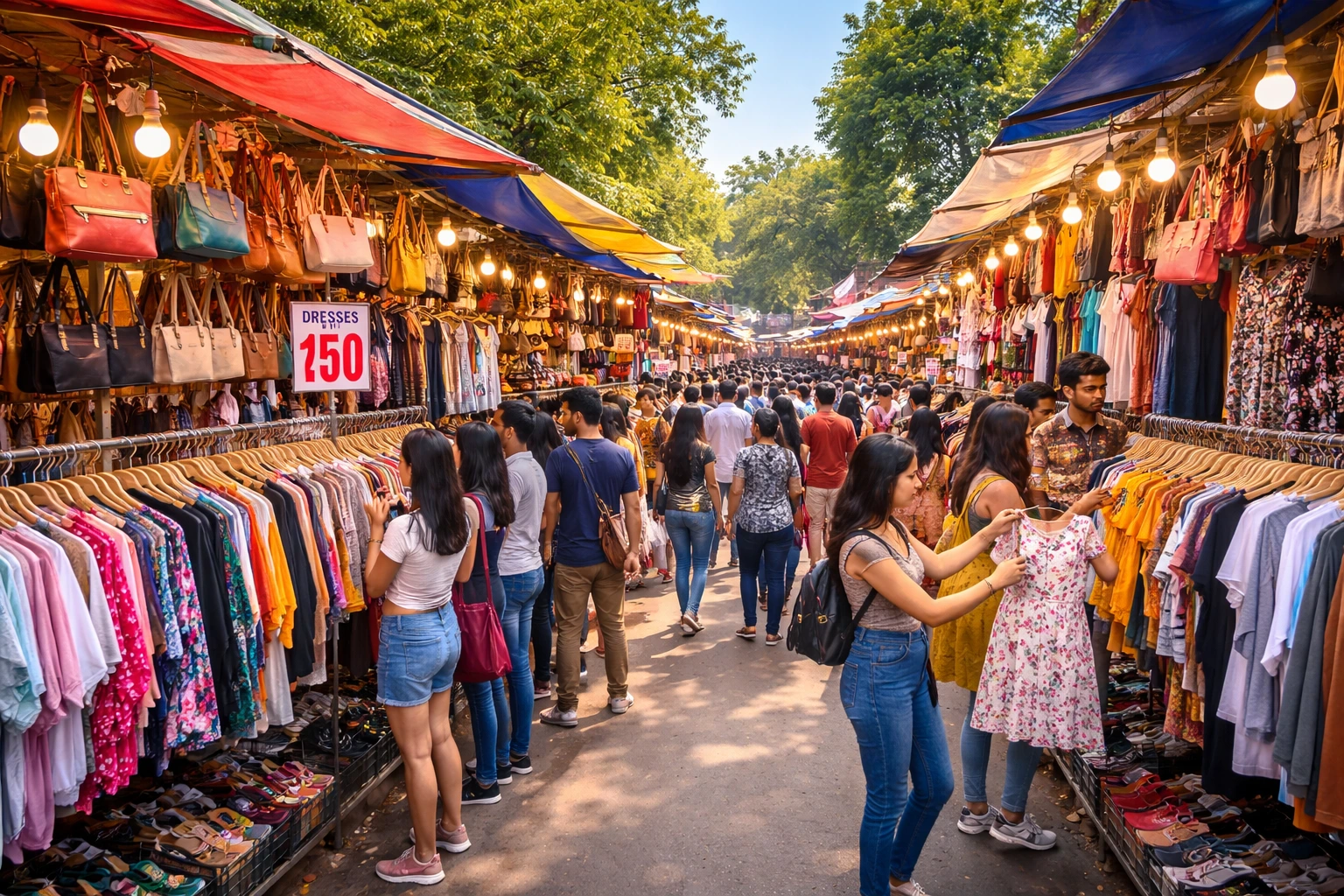
    If shopping is on your travel bucket list, Sarojini Market in New Delhi is a place you simply cannot miss. Known across India for its export surplus fashion, trendy clothes, and unbelievably low prices, Sarojini Market is a magnet for shoppers, fashion influencers, students, and tourists.

    Sarojini Market remains one of the best street shopping destinations in India, offering stylish outfits, accessories, footwear, and ethnic wear at prices that often feel unreal. This complete guide covers what to buy, best time to visit, bargaining tips, safety advice, and how to reach—so you shop smart and stress-free. 👜👗


    📌 Table of Contents

    1. Why Visit Sarojini Market
    2. What Makes Sarojini Market Famous
    3. Best Things to Buy in Sarojini Market
    4. Best Time & Day to Visit
    5. Sarojini Market Timings
    6. How to Reach Sarojini Market
    7. Shopping & Bargaining Tips (Must-Read)
    8. Budget Guide: How Cheap Is Sarojini Market
    9. Food Options Near Sarojini Market
    10. Safety Tips for Shoppers
    11. FAQs
    12. Explore More India Travel Guides

    🌟 Why Visit Sarojini Market

    ✔ Ultimate Budget Shopping Destination

    You can buy:

    • Dresses for ₹150–300
    • Tops under ₹200
    • Footwear under ₹500

    ✔ Latest Fashion Trends

    Many items come from export surplus and rejected international brands.

    ✔ Perfect Cultural Experience

    Shopping here is chaotic, loud, colorful—and absolutely unforgettable.

    ✔ Popular on Social Media

    Sarojini Market shopping hauls are trending on Instagram and YouTube.


    🏬 What Makes Sarojini Market Famous

    Sarojini Market is famous for:

    • Export surplus clothes
    • Factory rejects from global brands
    • Street stalls with fast fashion
    • Dirt-cheap pricing

    It is especially popular among:

    • College students
    • Budget travelers
    • Fashion bloggers
    • Tourists looking for local experiences

    👗 Best Things to Buy in Sarojini Market

    🧥 Western Wear

    • Tops, crop tops, shirts
    • Jackets and coats (best in winter)
    • Dresses and skirts

    🥻 Ethnic Wear

    • Kurtis
    • Dupattas
    • Palazzos

    👟 Footwear

    • Flats
    • Sneakers
    • Sandals

    👜 Accessories

    • Bags & slings
    • Earrings
    • Sunglasses
    • Belts & scarves

    🗓️ Best Time & Day to Visit Sarojini Market

    ✔ Best Months

    • October to March (pleasant weather)

    ✔ Best Days

    • Tuesday to Friday (less crowded)
    • Avoid Sunday evenings if you dislike crowds

    ✔ Best Time of Day

    • 11:30 AM – 3:00 PM for relaxed shopping
    • Evening for street food vibes (more crowded)

    ⏰ Sarojini Market Timings

    • Opening Days: Tuesday to Sunday
    • Closed: Monday
    • Timings:
      • Shops open around 11:00 AM
      • Peak crowd after 4:00 PM

    🚇 How to Reach Sarojini Market

    🚆 By Metro (Best Option)

    • Sarojini Nagar Metro Station (Pink Line)
    • Market is a 5-minute walk from Gate No. 2

    🚕 By Cab

    • Ola, Uber, local autos available
    • Traffic can be heavy during peak hours

    🚶 By Walking

    • Easy to explore nearby markets and eateries

    💬 Shopping & Bargaining Tips (Very Important!)

    🪙 Bargaining Rules

    • Start at 30–40% of the quoted price
    • Walk away if the price feels high
    • Be polite but confident

    ✔ Pro Tips

    • Carry cash (UPI accepted at many stalls)
    • Inspect clothes for defects
    • Try clothes where possible
    • Avoid buying without checking size

    💸 Budget Guide: How Cheap Is Sarojini Market?

    ItemPrice Range
    Tops₹150–300
    Dresses₹250–500
    Jeans₹400–700
    Footwear₹300–600
    Bags₹250–500

    You can shop an entire outfit under ₹1,000 easily.


    🍔 Food Options Near Sarojini Market

    After shopping, enjoy local food nearby:

    • Momos & chaat stalls
    • Cafes in Sarojini Nagar
    • INA Market (short auto ride)

    Street food is affordable but choose clean stalls.


    🔐 Safety Tips for Shoppers

    • Watch your bags and phones
    • Avoid carrying large amounts of cash
    • Go with friends if possible
    • Keep valuables zipped
    • Stay hydrated during summer

    Sarojini Market is generally safe but crowded.


    ❓ FAQs

    1. Is Sarojini Market good for tourists?

    Yes—it’s one of Delhi’s most famous shopping markets.

    2. Are trial rooms available?

    Mostly no—wear comfortable clothes.

    3. Is Sarojini Market open on Sunday?

    Yes, but it’s extremely crowded.

    4. Can foreigners shop here easily?

    Absolutely—vendors are used to tourists.

    5. Is it safe for solo women travelers?

    Yes, during daytime with basic precautions.


    🌍 Explore More India Travel Guides

    If you enjoyed exploring Sarojini Market, continue discovering India with our Rashtrapati Bhavan Travel Guide, perfect for history and architecture lovers.

    Budget travelers can explore our Ultimate Budget Hidden Gems Under $50/Day Worldwide, while cultural explorers will love our Ultimate Guide to Hidden Gem Destinations Around the World.

    These guides help you experience India and the world in an affordable, authentic, and memorable way.

  • 🕊️ Raj Ghat Travel Guide: Gandhi Memorial, Timings, History & Visitor Tips

    🕊️ Raj Ghat Travel Guide: Gandhi Memorial, Timings, History & Visitor Tips

    Experience Peace, Simplicity & India’s Soul in New Delhi

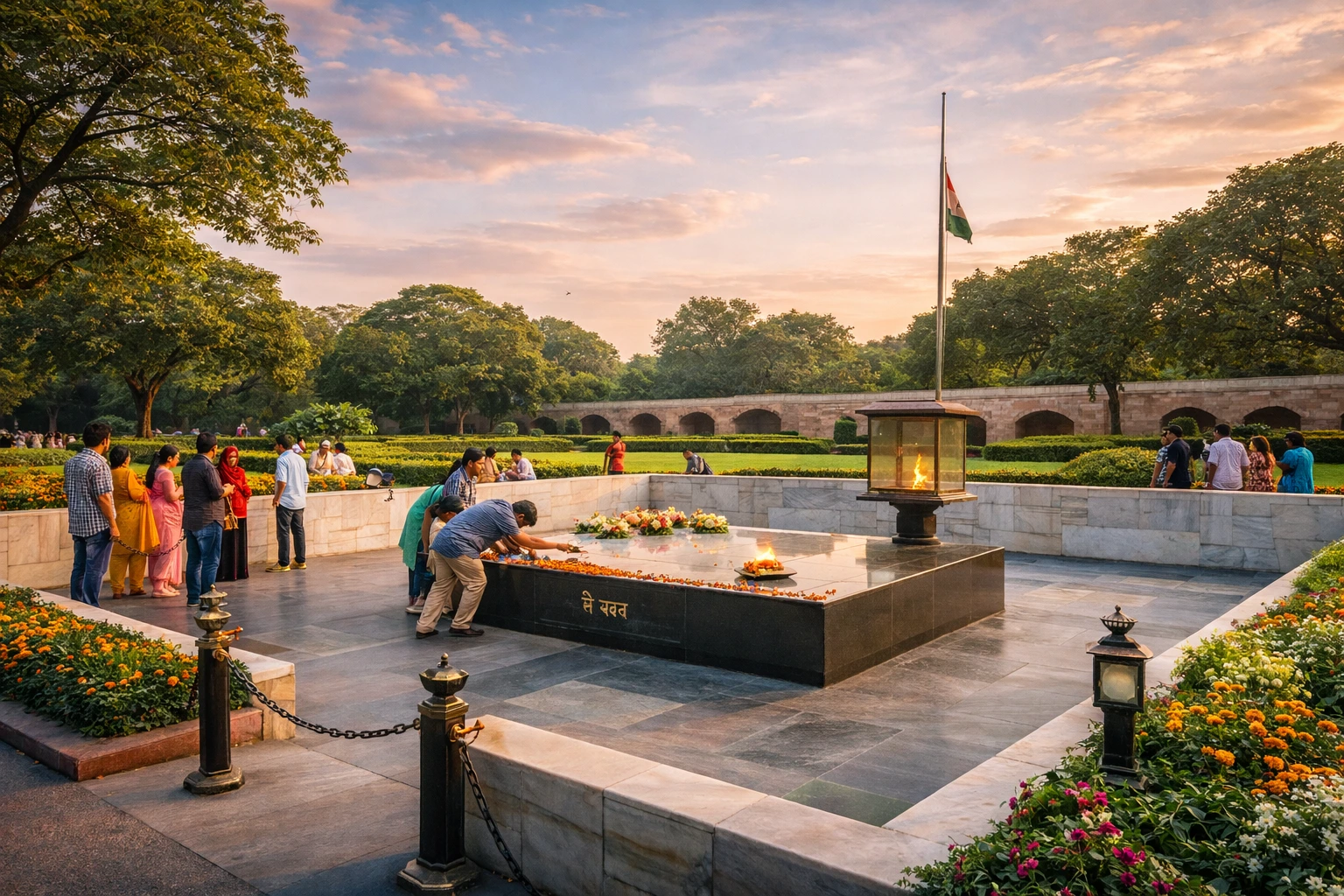
    Raj Ghat is not just a tourist attraction—it is a place of silence, reflection, and deep national emotion. Located on the banks of the Yamuna River in New Delhi, Raj Ghat marks the samadhi (memorial) of Mahatma Gandhi, the Father of the Nation.

    Raj Ghat continues to draw visitors from across India and the world who wish to understand Gandhi’s philosophy of truth, non-violence, and simplicity. This complete guide covers the history, meaning, best time to visit, timings, rules, how to reach, and nearby attractions, helping you plan a peaceful and meaningful visit. 🌿🕯️


    📌 Table of Contents

    1. Why Visit Raj Ghat
    2. History & Significance of Raj Ghat
    3. Architecture & Layout of Raj Ghat
    4. Eternal Flame & Inscriptions
    5. Best Time to Visit Raj Ghat
    6. Raj Ghat Timings
    7. How to Reach Raj Ghat
    8. Visitor Rules, Dress Code & Etiquette
    9. Suggested 1–2 Hour Visit Plan
    10. Nearby Attractions to Explore
    11. Safety & Travel Tips
    12. FAQs
    13. Explore More India Travel Guides

    🌟 Why Visit Raj Ghat

    ✔ A Place of Peace & Reflection

    Raj Ghat offers a calm escape from Delhi’s chaos.

    ✔ Tribute to Mahatma Gandhi

    It is the final resting place of the man who led India’s freedom struggle through non-violence.

    ✔ Educational & Spiritual Experience

    Ideal for students, history lovers, and international travelers.

    ✔ Free & Accessible

    Open to all, without entry fees.


    📜 History & Significance of Raj Ghat

    Raj Ghat marks the spot where Mahatma Gandhi was cremated on 31 January 1948, a day after his assassination.

    Key facts:

    • Gandhi passed away on 30 January 1948
    • Raj Ghat became a national memorial soon after
    • The site symbolizes simplicity and humility, reflecting Gandhi’s life

    World leaders visiting India often pay tribute here, highlighting its global importance.


    🏛️ Architecture & Layout of Raj Ghat

    Raj Ghat’s design is intentionally simple, aligning with Gandhian philosophy.

    🔹 Main Features

    • Black marble platform
    • Open-air structure
    • Peaceful gardens surrounding the memorial

    There are no statues—only space, silence, and respect.


    🔥 Eternal Flame & Gandhi’s Words

    At the center of Raj Ghat is an eternal flame, burning continuously in memory of Mahatma Gandhi.

    The black marble platform is inscribed with the words:

    “Hey Ram”
    (Gandhi’s last words)

    This simple inscription leaves a deep emotional impact on visitors.


    🗓️ Best Time to Visit Raj Ghat

    ✔ Best Months

    • October to March – pleasant weather

    ✔ Best Time of Day

    • Early morning (6:30–8:30 AM) – peaceful & quiet
    • Late afternoon – soft light and calm atmosphere

    ❌ Avoid

    • Hot afternoons in summer
    • Extremely crowded national holidays (unless attending ceremonies)

    ⏰ Raj Ghat Timings

    • Open All Days
    • Timing:
      • Morning: 6:30 AM
      • Evening: 6:00 PM

    Entry is free of cost for all visitors.


    🚇 How to Reach Raj Ghat

    🚆 By Metro

    • Indraprastha Metro Station (Blue Line)
    • Auto or short walk from station

    🚕 By Cab / Auto

    • Easily accessible via Ola, Uber, or local autos

    🚶 By Walking

    • Can be combined with nearby heritage walks

    👣 Visitor Rules, Dress Code & Etiquette

    ✔ Dress Code

    • Simple, modest clothing
    • Avoid flashy or revealing outfits

    ✔ Rules to Follow

    • Footwear must be removed before entering the memorial
    • Maintain silence
    • No photography on the main platform
    • No food or littering

    Respectful behavior is expected at all times.


    🗺️ Suggested 1–2 Hour Visit Plan

    Arrival:

    • Walk through landscaped gardens

    At the Memorial:

    • Pay respects
    • Spend quiet time near the eternal flame

    Exit Walk:

    • Explore surrounding memorials of other leaders
    • Relax in shaded areas

    Perfect for reflection and learning.


    🏛️ Nearby Attractions to Explore

    After Raj Ghat, you can visit:

    • National Gandhi Museum
    • Red Fort (short drive)
    • Jama Masjid
    • Shanti Van (Jawaharlal Nehru Memorial)

    Ideal for a half-day heritage itinerary.


    🔐 Safety & Travel Tips

    • Very safe with security presence
    • Carry water during summer
    • Follow instructions from guards
    • Best visited with family or school groups
    • Foreign visitors are welcome

    ❓ FAQs

    1. Is Raj Ghat open to tourists?

    Yes, it is open to everyone, including international visitors.

    2. Is there any entry fee?

    No, entry is completely free.

    3. Can children visit Raj Ghat?

    Yes, it is educational and peaceful.

    4. Is photography allowed?

    Photography is restricted near the main memorial.

    5. How much time should I spend here?

    1–2 hours is sufficient.


    🌍 Explore More India Travel Guides

    If Raj Ghat inspired you, continue exploring India’s heritage with our Rashtrapati Bhavan Travel Guide, which showcases India’s political and architectural legacy.

    Budget-conscious travelers can also explore our Ultimate Budget Hidden Gems Under $50/Day Worldwide, while culture lovers will enjoy our Ultimate Guide to Hidden Gem Destinations Around the World.

    Together, these guides help you understand India beyond sightseeing—through history, values, and lived experiences.

  • 🏰 Red Fort Travel Guide: History, Timings, Tickets & Visitor Tips

    🏰 Red Fort Travel Guide: History, Timings, Tickets & Visitor Tips

    Explore Delhi’s Iconic Mughal Fortress & UNESCO World Heritage Site

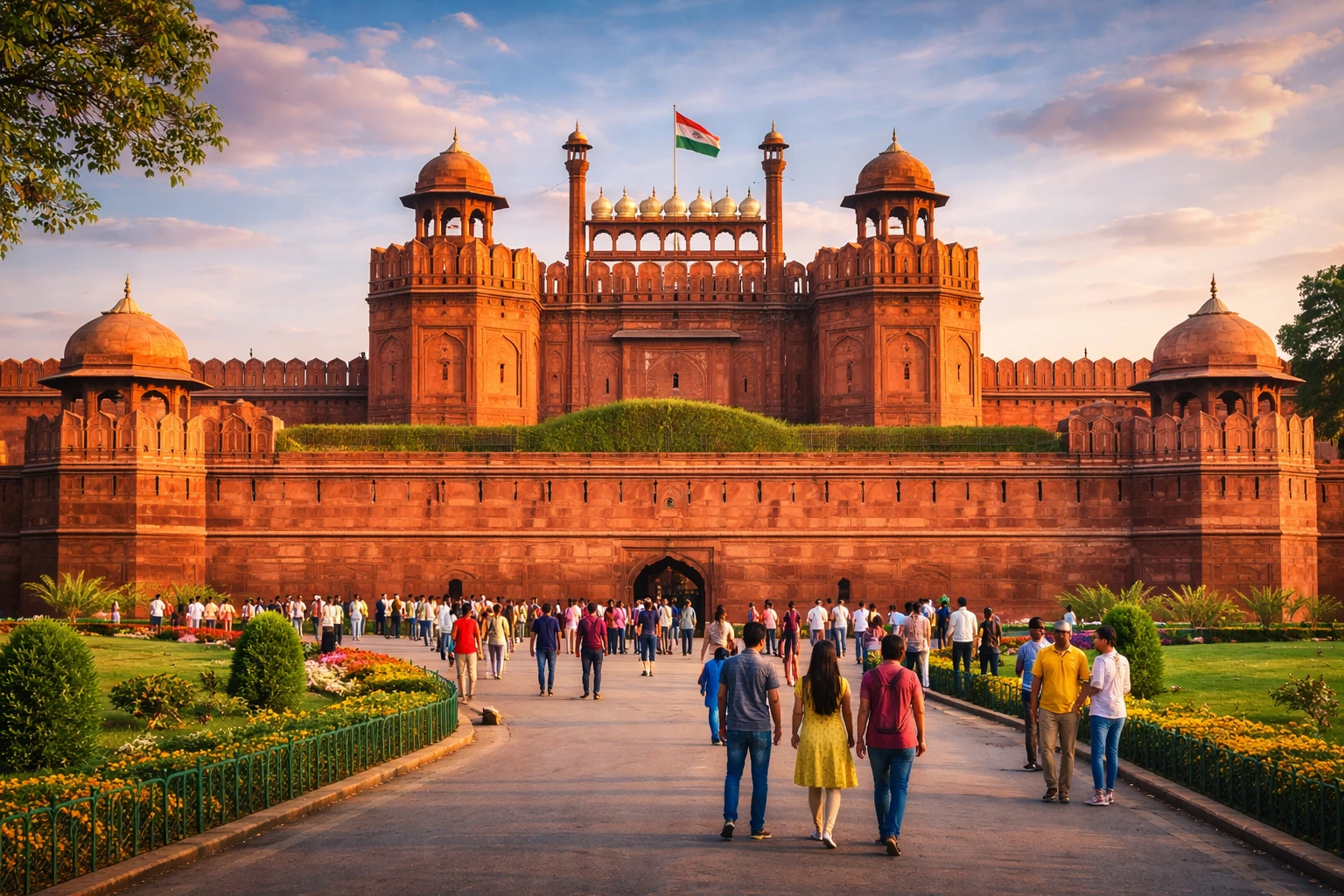
    The Red Fort (Lal Qila) is one of India’s most powerful symbols of history, independence, and architectural brilliance. Located in Old Delhi, this majestic red sandstone fort served as the main residence of Mughal emperors for nearly 200 years and continues to inspire millions of visitors every year.

    The Red Fort remains a must-visit attraction for anyone exploring Delhi. From grand halls and museums to the famous Independence Day celebrations, this guide covers everything you need to know—history, timings, ticket prices, best time to visit, how to reach, and insider tips. 🇮🇳✨


    📌 Table of Contents

    1. Why Visit Red Fort
    2. History & Significance of Red Fort
    3. Architecture & Design Highlights
    4. Major Attractions Inside Red Fort
    5. Best Time to Visit Red Fort
    6. Red Fort Timings
    7. Entry Tickets & Charges
    8. How to Reach Red Fort
    9. Light & Sound Show Experience
    10. Visitor Rules, Safety & Etiquette
    11. Suggested 2–3 Hour Visit Plan
    12. FAQs
    13. Explore More Delhi Travel Guides

    🌟 Why Visit Red Fort

    ✔ UNESCO World Heritage Site

    Recognized globally for its historical and architectural value.

    ✔ Symbol of Indian Independence

    The Prime Minister hoists the national flag here every 15 August.

    ✔ Grand Mughal Architecture

    Massive walls, intricate carvings, gardens, and royal halls.

    ✔ Perfect for History & Culture Lovers

    A deep dive into Mughal and colonial-era India.


    📜 History & Significance of Red Fort

    The Red Fort was built by Emperor Shah Jahan in 1639 when he shifted the Mughal capital from Agra to Delhi.

    Key historical facts:

    • Original name: Qila-e-Mubarak
    • Construction period: 1638–1648
    • Served as Mughal residence until 1857
    • Witnessed British rule after the Revolt of 1857

    Today, the Red Fort stands as a proud reminder of India’s rich and complex past.


    🏛️ Architecture & Design Highlights

    The Red Fort is a masterpiece of Indo-Islamic and Mughal architecture.

    🔹 Key Features

    • Built with red sandstone
    • Massive defensive walls (up to 33 meters high)
    • Marble palaces and pavilions
    • Intricate floral designs and calligraphy

    The fort complex spreads over 254 acres.


    🏰 Major Attractions Inside Red Fort

    🏛️ Lahori Gate

    The main entrance, facing Chandni Chowk.

    🏛️ Diwan-i-Aam

    Hall of Public Audience where the emperor addressed citizens.

    🏛️ Diwan-i-Khas

    Hall of Private Audience, once adorned with the famous Peacock Throne.

    🌿 Hayat Bakhsh Bagh

    Royal gardens with water channels.

    🖼️ Museums

    Exhibits on Mughal history, freedom struggle, and Indian heritage.


    🗓️ Best Time to Visit Red Fort

    ✔ Best Months

    • October to March – cool and comfortable weather

    ✔ Best Time of Day

    • Morning (9:00–11:00 AM) – fewer crowds
    • Late afternoon for photography

    ❌ Avoid

    • Peak summer afternoons
    • National holidays if you dislike crowds

    ⏰ Red Fort Timings

    • Open Days: Tuesday to Sunday
    • Closed: Monday

    🕘 Timings

    • 9:30 AM – 4:30 PM
    • Last entry: Around 3:30 PM

    Timings may change during national events.


    🎟️ Entry Tickets & Charges (Approx.)

    • Indian Citizens: ₹35
    • Foreign Tourists: ₹500
    • Children below 15 years: Free
    • Light & Sound Show: Separate ticket

    Tickets can be purchased online or at the gate.


    🚇 How to Reach Red Fort

    🚆 By Metro

    • Lal Qila Metro Station (Violet Line)
    • Exit Gate No. 4 for direct access

    🚕 By Cab / Auto

    • Easily reachable, but traffic can be heavy

    🚶 Nearby Area

    • Chandni Chowk
    • Jama Masjid

    🎥 Light & Sound Show Experience

    The Light & Sound Show narrates the history of Delhi and the Red Fort using dramatic lighting and narration.

    🎭 Show Timings

    • Evening (varies by season)

    Highly recommended for first-time visitors.


    👮 Visitor Rules, Safety & Etiquette

    • Valid ID required for entry
    • No large bags allowed
    • Photography allowed (no drones)
    • Follow security instructions
    • Respect heritage structures

    Security checks are strict but smooth.


    🗺️ Suggested 2–3 Hour Visit Plan

    Hour 1:

    • Entry via Lahori Gate
    • Diwan-i-Aam & museums

    Hour 2:

    • Diwan-i-Khas
    • Hayat Bakhsh Bagh

    Optional:

    • Evening Light & Sound Show

    ❓ FAQs

    1. Is Red Fort open every day?

    No, it is closed on Mondays.

    2. Is photography allowed inside?

    Yes, for personal use.

    3. How much time is enough?

    2–3 hours is ideal.

    4. Is Red Fort safe for families?

    Yes, it is family-friendly.

    5. Can foreigners visit Red Fort?

    Absolutely—it’s one of Delhi’s top tourist attractions.


    🌍 Explore More Delhi Travel Guides

    After exploring the Red Fort, continue your Delhi journey with our India Gate Travel Guide, Raj Ghat Travel Guide, and National Zoological Park Travel Guide—all located nearby.

    History lovers will also enjoy our Rashtrapati Bhavan Travel Guide, while budget travelers can explore our Ultimate Budget Hidden Gems Under $50/Day Worldwide.

    Together, these guides help you experience Delhi’s heritage, culture, and stories in depth.

  • India Gate Travel Guide 2026: History, Timings, Best Time & Visitor Tips ✨

    India Gate Travel Guide 2026: History, Timings, Best Time & Visitor Tips ✨

    Delhi’s Most Iconic War Memorial & Evening Hangout

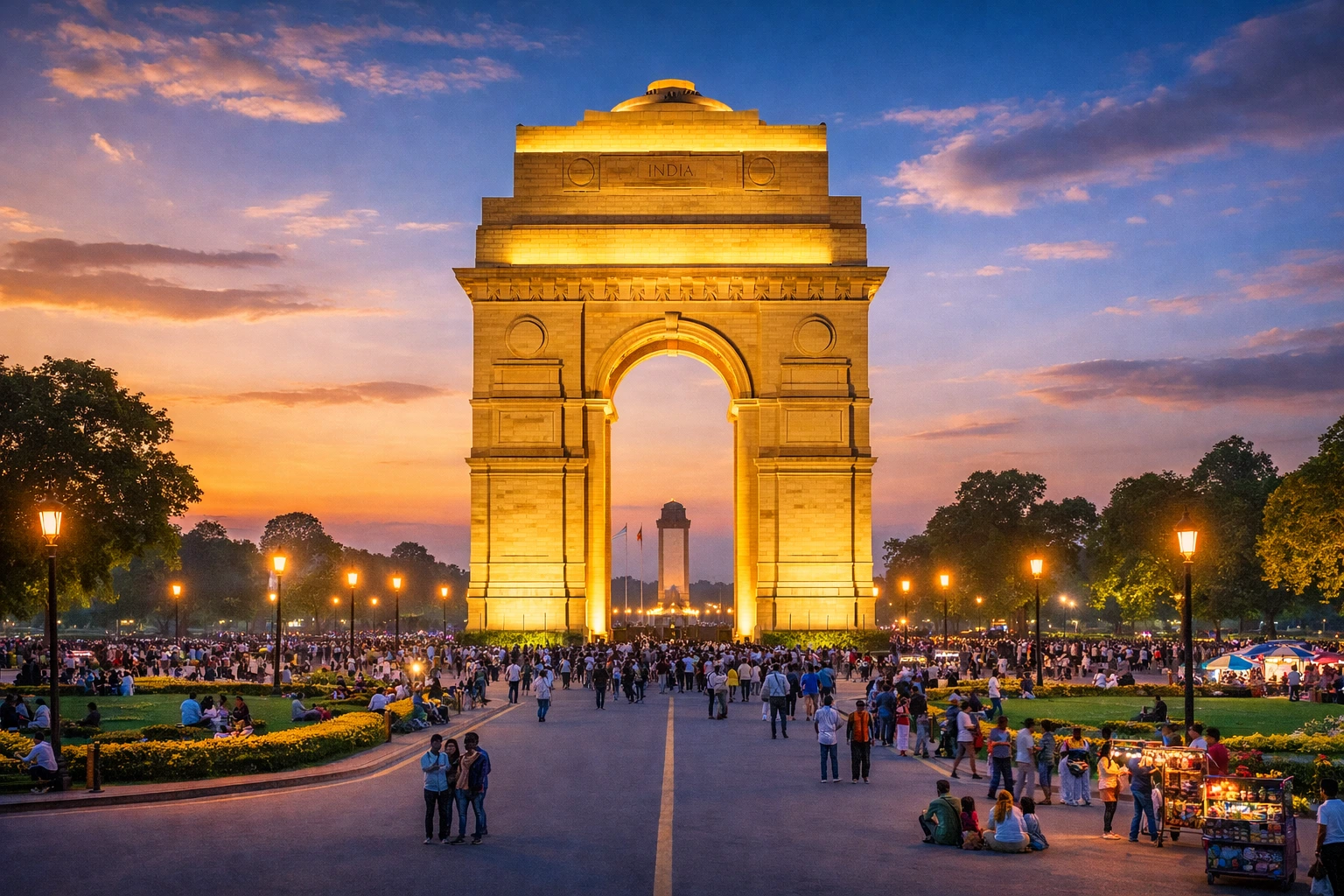
    Standing tall at the heart of New Delhi, India Gate is more than just a monument—it is a symbol of sacrifice, pride, and national memory. Built to honor Indian soldiers who lost their lives during World War I, India Gate today is also one of Delhi’s most loved public spaces for locals and tourists alike.

    In 2026, India Gate remains a must-visit destination for travelers looking to experience Indian history, patriotism, evening vibes, and open green spaces. This complete guide covers history, significance, best time to visit, timings, how to reach, safety tips, and nearby attractions to help you plan the perfect visit. 🏛️🌆


    📌 Table of Contents

    1. Why Visit India Gate in 2026
    2. History & Significance of India Gate
    3. Architecture & Design Highlights
    4. Amar Jawan Jyoti & National Importance
    5. Best Time to Visit India Gate
    6. India Gate Timings (2026)
    7. How to Reach India Gate
    8. Things to Do at India Gate
    9. Visitor Rules, Safety & Etiquette
    10. Suggested 1–2 Hour Visit Plan
    11. Nearby Attractions to Explore
    12. FAQs
    13. Explore More India Travel Guides

    🌟 Why Visit India Gate in 2026

    ✔ Symbol of Sacrifice & Patriotism

    India Gate honors over 70,000 Indian soldiers who died during World War I.

    ✔ Perfect for Evening Visits

    The monument looks stunning when illuminated after sunset.

    ✔ Family-Friendly & Free

    Open spaces, lawns, and vendors make it ideal for families.

    ✔ Central Location

    Easily accessible and close to many major attractions.


    📜 History & Significance of India Gate

    India Gate was built as a war memorial to commemorate Indian soldiers of the British Indian Army who lost their lives between 1914–1921.

    Key facts:

    • Designed by Sir Edwin Lutyens
    • Completed in 1931
    • Inspired by the Arc de Triomphe in Paris
    • Names of soldiers engraved on the walls

    India Gate stands as a reminder of courage, duty, and sacrifice.


    🏛️ Architecture & Design Highlights

    🔹 Monument Details

    • Height: 42 meters
    • Material: Sandstone and granite
    • Grand arch structure
    • Wide ceremonial boulevard surroundings

    The simplicity and symmetry of the structure give it timeless appeal.


    🔥 Amar Jawan Jyoti & National Importance

    The Amar Jawan Jyoti (Flame of the Immortal Soldier) was originally located at India Gate and symbolized India’s respect for fallen soldiers.

    In recent years, the flame has been ceremonially merged with the National War Memorial, located nearby—enhancing the area’s national importance.


    🗓️ Best Time to Visit India Gate

    ✔ Best Months

    • October to March – pleasant weather

    ✔ Best Time of Day

    • Early morning – peaceful walks
    • Evening (6:00–9:00 PM) – lively atmosphere and lighting

    ❌ Avoid

    • Hot summer afternoons
    • National event days if you dislike crowds

    ⏰ India Gate Timings (2026)

    • Open: 24 hours
    • Best visiting hours:
      • Morning: 6:00–9:00 AM
      • Evening: 6:00–10:00 PM

    No entry fee required.


    🚇 How to Reach India Gate

    🚆 By Metro

    • Central Secretariat Metro Station (Yellow & Violet Line)
    • Auto or 15–20 minute walk

    🚕 By Cab

    • Ola, Uber, and local taxis easily available

    🚶 On Foot

    • Ideal if walking from Kartavya Path or nearby monuments

    🎯 Things to Do at India Gate

    🌿 Walk & Relax

    Enjoy wide lawns and evening breezes.

    📸 Photography

    Sunset and night shots are especially popular.

    🍦 Street Snacks

    Ice cream, chaat, and local vendors nearby.

    🚲 Cycling

    Cycling paths available around Kartavya Path area.


    👮 Visitor Rules, Safety & Etiquette

    • Maintain cleanliness
    • Avoid littering
    • No climbing the monument
    • Follow police instructions
    • Photography allowed

    Area is heavily secured and safe for all visitors.


    🗺️ Suggested 1–2 Hour Visit Plan

    Arrival:

    • Walk around Kartavya Path

    At India Gate:

    • Read inscriptions
    • Relax on lawns
    • Take photographs

    After Visit:

    • Walk towards National War Memorial
    • Evening snacks nearby

    🏛️ Nearby Attractions to Explore

    You can combine India Gate with:

    • National War Memorial
    • Rashtrapati Bhavan
    • Raj Ghat
    • National Museum

    Perfect for a half-day heritage circuit.


    ❓ FAQs

    1. Is India Gate open at night?

    Yes, it is open 24 hours.

    2. Is there an entry fee?

    No, entry is free.

    3. Is India Gate safe at night?

    Yes, it is well-lit and guarded.

    4. Can families visit with kids?

    Absolutely—very family-friendly.

    5. Is photography allowed?

    Yes, photography is allowed.


    🌍 Explore More India Travel Guides

    If India Gate sparked your interest, continue exploring Delhi’s iconic landmarks with our Rashtrapati Bhavan Travel Guide 2026 and Raj Ghat Travel Guide 2026, both offering deep insights into India’s political and historical heritage.

    Budget travelers can also explore our Ultimate Budget Hidden Gems Under $50/Day Worldwide, while global explorers will enjoy our Ultimate Guide to Hidden Gem Destinations Around the World 2026.

    These guides help you experience India through history, culture, and meaningful travel.

  • 🦁 National Zoological Park Travel Guide: Timings, Tickets, Animals & Visitor Tips

    🦁 National Zoological Park Travel Guide: Timings, Tickets, Animals & Visitor Tips

    Explore Delhi Zoo – A Green Escape in the Heart of the Capital

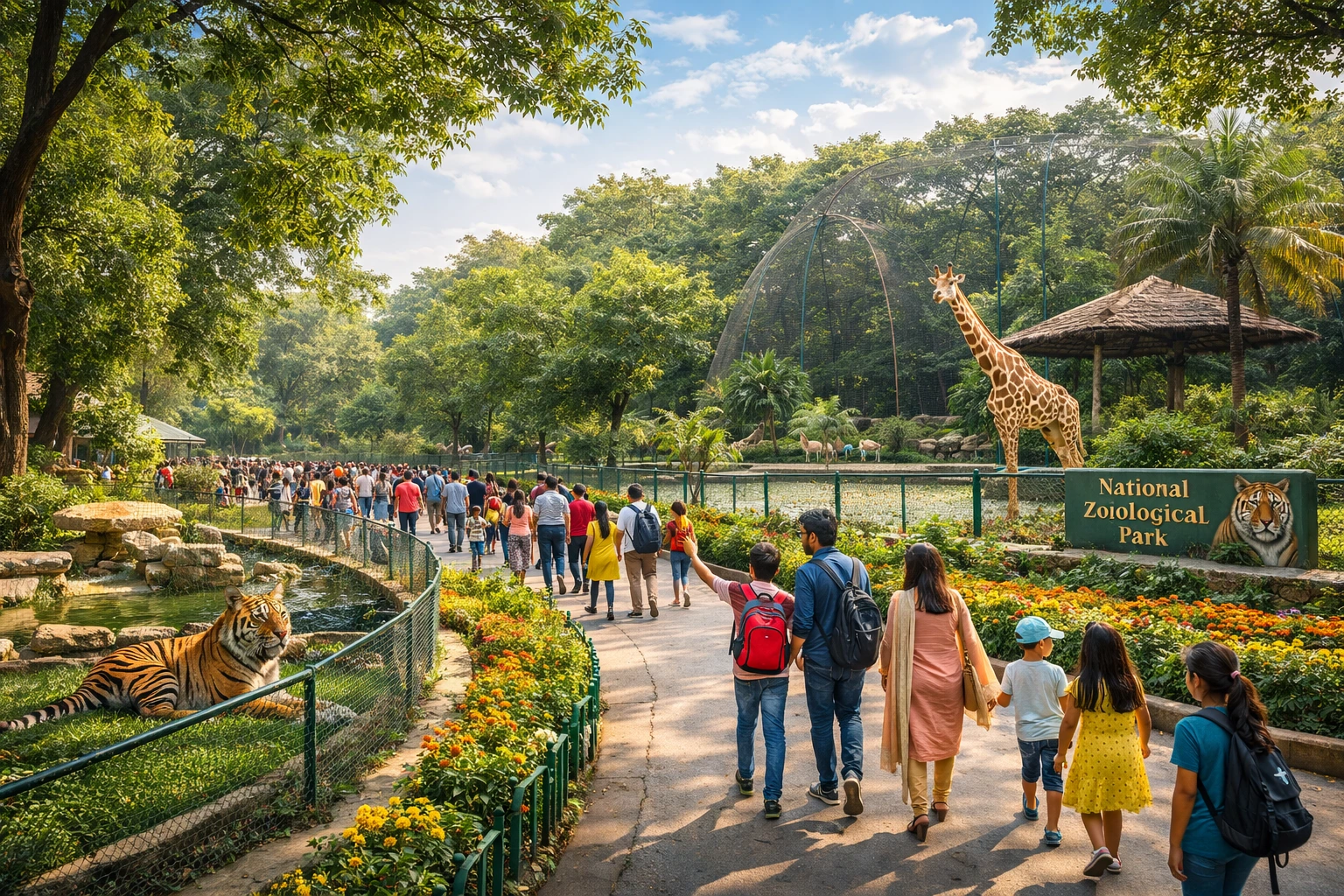
    The National Zoological Park, popularly known as Delhi Zoo, is one of India’s most well-known wildlife attractions. Spread across a vast green area near Purana Qila, the zoo offers visitors a chance to see animals from India and around the world in spacious, naturalistic habitats.

    Delhi Zoo remains a favorite destination for families, children, school groups, and tourists looking to combine education, nature, and leisure. This complete guide covers animals to see, best time to visit, ticket prices, timings, how to reach, safety rules, and insider tips to help you plan a smooth and enjoyable visit. 🌿🐘


    📌 Table of Contents

    1. Why Visit National Zoological Park
    2. About National Zoological Park (Delhi Zoo)
    3. Animals You Can See at Delhi Zoo
    4. Zoo Layout & Major Zones
    5. Best Time to Visit Delhi Zoo
    6. National Zoological Park Timings
    7. Entry Tickets & Charges
    8. How to Reach National Zoological Park
    9. Things to Do Inside the Zoo
    10. Visitor Rules, Safety & Etiquette
    11. Suggested 2–3 Hour Visit Plan
    12. FAQs
    13. Explore More Delhi Travel Guides

    🌟 Why Visit National Zoological Park

    ✔ One of India’s Largest Zoos

    Home to 1,000+ animals and birds across a massive green landscape.

    ✔ Perfect for Families & Kids

    Educational, fun, and relaxing for all age groups.

    ✔ Centrally Located

    Easy to combine with Purana Qila, India Gate, and Raj Ghat.

    ✔ Peaceful Nature Experience

    A refreshing break from Delhi’s busy streets.


    🐾 About National Zoological Park (Delhi Zoo)

    Established in 1959, the National Zoological Park was designed to provide animals with environments similar to their natural habitats.

    Key facts:

    • Area: 176 acres
    • Location: Near Purana Qila, New Delhi
    • Managed by: Ministry of Environment, Forest and Climate Change

    The zoo focuses on conservation, education, and research, not just entertainment.


    🦓 Animals You Can See at Delhi Zoo

    Delhi Zoo is home to a diverse range of wildlife.

    🐅 Mammals

    • Royal Bengal Tiger
    • Asiatic Lion
    • White Tiger
    • Leopard
    • Indian Rhinoceros
    • Hippopotamus
    • Giraffe
    • Zebra

    🐻 Other Animals

    • Sloth Bear
    • Himalayan Black Bear
    • Nilgai
    • Swamp Deer

    🦜 Birds & Reptiles

    • Peacocks
    • Parrots
    • Storks
    • Crocodiles
    • Snakes

    Animal sightings may vary depending on weather and animal activity.


    🗺️ Zoo Layout & Major Zones

    The zoo is spread out and best explored at a relaxed pace.

    🔹 Key Areas

    • Big Cats Zone
    • Herbivore Enclosures
    • Bird Section
    • Reptile House
    • Wetland Area

    You can walk or use battery-operated vehicles available inside.


    🗓️ Best Time to Visit Delhi Zoo

    ✔ Best Months

    • October to March – cool and pleasant weather

    ✔ Best Time of Day

    • 9:00 AM – 11:30 AM (animals are most active)

    ❌ Avoid

    • Summer afternoons
    • Extremely crowded weekends if possible

    ⏰ National Zoological Park Timings

    • Open Days: Tuesday to Sunday
    • Closed: Monday

    🕘 Timings

    • April to October: 9:00 AM – 4:30 PM
    • November to March: 9:30 AM – 4:00 PM

    Last entry usually allowed one hour before closing.


    🎟️ Entry Tickets & Charges (Approx.)

    • Adults: ₹80
    • Children (5–12 years): ₹40
    • Children below 5 years: Free
    • Battery Vehicle (optional): Extra charge

    Ticket prices may change—check official sources before visiting.


    🚇 How to Reach National Zoological Park

    🚆 By Metro

    • Pragati Maidan Metro Station (Blue Line)
    • Short auto or cab ride from the station

    🚕 By Cab / Auto

    • Ola, Uber, and local autos easily available

    🚶 Nearby Landmarks

    • Purana Qila
    • Supreme Court of India

    🎯 Things to Do Inside the Zoo

    • Observe animals in natural-style enclosures
    • Educational learning for kids
    • Photography (non-commercial)
    • Relax in shaded green areas
    • Use battery-operated rides to save energy

    Carry water bottles and wear comfortable shoes.


    👮 Visitor Rules, Safety & Etiquette

    • Do not feed animals
    • No plastic bags allowed
    • Maintain silence near enclosures
    • Follow zoo staff instructions
    • Photography allowed without flash
    • Do not litter

    Zoo security and staff ensure visitor safety.


    🗺️ Suggested 2–3 Hour Visit Plan

    Hour 1:

    • Big cats and herbivore section

    Hour 2:

    • Birds, reptiles, wetlands

    Optional:

    • Battery vehicle ride for full zoo loop

    Ideal for families and first-time visitors.


    ❓ FAQs

    1. Is Delhi Zoo good for kids?

    Yes, it’s one of the best kid-friendly attractions in Delhi.

    2. Is food allowed inside?

    Outside food is usually restricted; small snacks may be allowed.

    3. Is photography allowed?

    Yes, for personal use without flash.

    4. How much time is enough?

    2–3 hours is ideal.

    5. Is Delhi Zoo safe?

    Yes, it is well-maintained and secure.


    🌍 Explore More Delhi Travel Guides

    If you enjoyed visiting Delhi Zoo, continue exploring nearby attractions like India Gate Travel Guide, Raj Ghat Travel Guide, and Rashtrapati Bhavan Travel Guidefor a complete Delhi sightseeing experience.

    Budget travelers can also explore our Ultimate Budget Hidden Gems Under $50/Day Worldwide, while global explorers will love our Ultimate Guide to Hidden Gem Destinations Around the World.

    These guides help you plan meaningful, family-friendly, and affordable travel experiences.

  • 💸 Ultimate Budget Hidden Gems Under $50/Day Worldwide (2026) 🌍

    💸 Ultimate Budget Hidden Gems Under $50/Day Worldwide (2026) 🌍

    Cheapest Countries, Low-Cost Travel & Maximum Experiences

    Traveling the world doesn’t need to be expensive. In 2026, some of the most unforgettable destinations are also the most affordable—offering rich culture, beautiful landscapes, warm hospitality, and full daily costs under $50 per day.

    From Southeast Asia to Eastern Europe, Africa, and South America, these budget hidden gem destinations allow you to travel longer, deeper, and smarter—without sacrificing comfort or experiences. This guide is perfect for backpackers, solo travelers, digital nomads, and slow travelers looking for maximum value.


    📌 Table of Contents

    1. Why Budget Hidden Gems Are Trending in 2026
    2. Best Budget Destinations in Asia
    3. Cheapest Hidden Gems in Europe
    4. Affordable African Destinations
    5. Budget-Friendly Americas
    6. Daily Cost Breakdown (Food, Stay, Transport)
    7. 7–10 Day Ultra-Budget Itinerary
    8. How to Save More While Traveling
    9. Safety Tips for Budget Travelers
    10. FAQs
    11. Explore More Hidden Gem Travel Guides

    🌟 Why Budget Hidden Gems Are Exploding in Popularity in 2026

    ✔ Travel Longer, Not Faster

    Budget destinations allow slow travel—spending weeks instead of days.

    ✔ Escape Tourist Inflation

    Famous cities come with inflated prices; hidden gems don’t.

    ✔ Authentic Local Life

    You eat local food, stay with local hosts, and experience real culture.

    ✔ Ideal for Digital Nomads

    Low costs + improving internet = perfect remote work destinations.


    🌏 Best Budget Hidden Gems in Asia (Under $40/Day)

    Asia remains the cheapest continent for high-quality travel.


    🇱🇦 Laos – Calm, Culture & Nature

    • Guesthouse: $10–15
    • Local meals: $2–4
    • Transport: $3–5

    Daily total: $25–35

    Why Laos?

    • Waterfalls
    • Temples
    • Relaxed pace
    • Safe & peaceful

    🇻🇳 Vietnam (Beyond Big Cities)

    • Homestays: $8–12
    • Street food: $1–3
    • Buses: $5

    Daily total: $25–35

    Hidden spots:

    • Ninh Binh
    • Ha Giang Loop
    • Phong Nha caves

    🇮🇩 Indonesia (Outside Bali)

    • Lombok
    • Flores
    • Java villages

    Daily total: $30–40


    🇪🇺 Cheapest Hidden Gems in Europe (Under $50/Day)

    Yes—Europe can be affordable if you go east or south.


    🇦🇱 Albania – Europe’s Best Budget Secret

    • Guesthouses: $15–20
    • Meals: $4–7
    • Transport: $5

    Daily total: $35–45

    Why Albania?

    • Riviera beaches
    • Alpine hikes
    • UNESCO towns

    🇬🇪 Georgia – Wine, Mountains & Visa-Free Stays 🍷

    • Accommodation: $12–18
    • Meals: $5
    • Transport: $5

    Daily total: $30–40

    Bonus:

    • 1-year visa-free stay for many nationalities

    🇷🇴 Romania (Rural & Transylvania)

    • Medieval towns
    • Carpathian Mountains

    Daily total: $40–50


    🌍 Affordable African Destinations (Under $50/Day)

    Africa has incredible budget travel options—if you avoid luxury safari zones.


    🇸🇱 Sierra Leone – Beaches Without Crowds

    • Lodging: $15–20
    • Food: $5–7
    • Transport: $5

    Daily total: $35–45


    🇲🇦 Morocco (Away from Tourist Cities)

    • Atlas villages
    • Small desert towns

    Daily total: $40–50


    🇪🇬 Egypt (Local Travel Style)

    • Trains + guesthouses

    Daily total: $35–45


    🌎 Budget-Friendly Americas (Under $50/Day)

    South America is perfect for low-cost, high-reward travel.


    🇧🇴 Bolivia – South America’s Best Budget Country

    • Hostels: $8–12
    • Meals: $3–5
    • Transport: $5

    Daily total: $25–35


    🇨🇴 Colombia (Small Towns)

    • Jardin
    • Salento
    • Popayán

    Daily total: $35–45


    🇬🇹 Guatemala – Culture & Volcanoes

    • Lake Atitlán villages
    • Antigua outskirts

    Daily total: $30–40


    💵 Daily Cost Breakdown (Average Budget Traveler)

    ExpenseDaily Cost
    Accommodation$10–20
    Food$8–15
    Transport$5–10
    Activities$5–10
    Total$25–50/day

    🗺️ 7–10 Day Ultra-Budget Itinerary (Example)

    Day 1–3: Laos (Luang Prabang)

    Waterfalls, temples, night markets.

    Day 4–6: Albania (Berat & Riviera)

    UNESCO towns, beaches.

    Day 7–10: Bolivia (Uyuni & Sucre)

    Salt flats, colonial cities.


    💡 How to Save Even More While Traveling

    • Eat where locals eat
    • Travel by bus or train
    • Stay longer for weekly discounts
    • Avoid tourist tours—hire local guides
    • Use homestays and guesthouses

    🔐 Safety Tips for Budget Travelers

    • Don’t flash valuables
    • Keep digital document copies
    • Use trusted transport
    • Learn basic local phrases
    • Buy travel insurance

    Budget travel is safe when done smartly.


    ❓ FAQs

    1. Is $50/day realistic in 2026?

    Yes—in many countries across Asia, Africa, and South America.

    2. Are these destinations safe?

    Yes, with basic precautions.

    3. Can digital nomads live under $1,000/month?

    Absolutely—in several destinations listed here.

    4. Does cheap mean low quality?

    No—many places offer high-quality experiences at low cost.

    5. Are visas expensive?

    Many budget countries offer visa-free or low-cost visas.


    🌍 Explore More Hidden Gem Travel Guides

    If traveling affordably excites you, explore our Ultimate Guide to Hidden Gem Destinations Around the World 2026, where we compare underrated places across continents.

    You may also enjoy our Hidden Gems in Europe 2026, Underrated Asian Destinations 2026, Off-the-Beaten-Path Africa 2026, and Lesser-Known Americas 2026—each offering detailed itineraries, safety tips, and cost breakdowns.

    Together, these guides help you travel smarter, cheaper, and deeper in 2026.

  • 🌎 Lesser-Known Americas: Colombia, Peru & Bolivia ✨

    🌎 Lesser-Known Americas: Colombia, Peru & Bolivia ✨

    Colorful Cultures, Epic Landscapes & South America’s Least Crowded Places

    South America is often associated with famous attractions like Machu Picchu, Rio de Janeiro, or Buenos Aires. But in 2026, smart travelers are going beyond the obvious to explore the lesser-known gems of the Americas—destinations rich in culture, nature, and authenticity, yet surprisingly uncrowded.

    Colombia, Peru, and Bolivia offer vibrant towns, ancient civilizations, dramatic mountains, colorful markets, and some of the most stunning natural scenery on the planet—all without the overwhelming crowds seen in mainstream hotspots. 🌄🦙


    📌 Table of Contents

    1. Why Colombia, Peru & Bolivia Are Hidden Gems in 2026
    2. Hidden Gems in Colombia
    3. Hidden Gems in Peru
    4. Hidden Gems in Bolivia
    5. 7–10 Day Suggested Itinerary
    6. Average Daily Budget Breakdown
    7. Best Time to Visit in 2026
    8. How to Reach These Destinations
    9. Where to Stay
    10. Safety Tips for Travelers
    11. FAQs
    12. Explore More Hidden Gem Travel Guides
    13. SEO Metadata
    14. Featured Image Metadata

    🌟 Why Colombia, Peru & Bolivia Are Hidden Gems in 2026

    ✔ Rich Culture Beyond Famous Landmarks

    These countries offer authentic local life far beyond their most popular attractions.

    ✔ Incredible Value for Money

    Food, transport, and accommodation remain affordable compared to North America and Europe.

    ✔ Jaw-Dropping Landscapes

    From cloud forests to salt deserts, nature here feels otherworldly.

    ✔ Warm & Welcoming People

    Local hospitality is one of South America’s greatest highlights.


    🇨🇴 Hidden Gems in Colombia – Colorful Towns & Cloud Forests

    Colombia has reinvented itself as one of the most exciting destinations in the Americas, offering safety, beauty, and culture.


    🗺️ Top Hidden Places in Colombia

    1. Cocora Valley

    Towering wax palm trees surrounded by misty green valleys—unique to Colombia.


    2. Jardin

    A charming coffee town with:

    • Colorful houses
    • Waterfalls
    • Relaxed village life

    3. Guatapé (Beyond the Rock)

    Most travelers climb the rock and leave—stay longer to explore lakes, islands, and hidden viewpoints.


    4. Tayrona’s Lesser-Known Trails

    Beyond the main beaches lie quieter jungle paths and secret coves.


    🧭 Best Time to Visit Colombia

    December–March & July–August


    ✈️ How to Reach Colombia

    Fly into:

    • Bogotá (BOG)
    • Medellín (MDE)

    Excellent domestic flight connections.


    💰 Budget Per Day in Colombia

    • Backpacker: $30–45/day
    • Mid-Range: $60–100/day
    • Luxury: $150+/day

    🇵🇪 Hidden Gems in Peru – Ancient Valleys & Living Traditions

    Peru is far more than Machu Picchu. Its rural regions preserve ancient culture and breathtaking scenery.


    🗺️ Top Hidden Places in Peru

    1. Sacred Valley (Beyond the Classics)

    Villages like Pisac and Ollantaytambo offer markets, ruins, and peaceful stays.


    2. Choquequirao Trek

    Often called the “sister city” of Machu Picchu—with only a fraction of the visitors.


    3. Colca Canyon

    One of the world’s deepest canyons, home to condors and traditional villages.


    4. Huacachina & Ica Region

    Desert landscapes, sandboarding, and oasis views.


    🧭 Best Time to Visit Peru

    May–September


    ✈️ How to Reach Peru

    Fly into:

    • Lima (LIM)
    • Cusco (CUZ)

    Domestic flights and buses connect major regions.


    💰 Budget Per Day in Peru

    • Backpacker: $30–45/day
    • Mid-Range: $60–100/day
    • Luxury: $150+/day

    🇧🇴 Hidden Gems in Bolivia – Salt Deserts & Indigenous Culture 🦙

    Bolivia is one of South America’s most authentic and least visited countries.


    🗺️ Top Hidden Places in Bolivia

    1. Salar de Uyuni (Beyond the Tours)

    Multi-day routes reveal lagoons, flamingos, and surreal landscapes.


    2. Lake Titicaca Villages

    Stay with local families on quiet islands for cultural immersion.


    3. Torotoro National Park

    Caves, dinosaur footprints, and canyon hikes.


    4. Sucre

    Bolivia’s most beautiful city with colonial architecture and relaxed vibes.


    🧭 Best Time to Visit Bolivia

    May–October


    ✈️ How to Reach Bolivia

    Fly into:

    • La Paz (LPB)
    • Santa Cruz (VVI)

    💰 Budget Per Day in Bolivia

    • Backpacker: $25–40/day
    • Mid-Range: $50–90/day
    • Luxury: $130+/day

    🗺️ 7–10 Day Suggested Itinerary (Americas Hidden Gems 2026)

    Day 1–3: Colombia (Medellín & Cocora Valley)

    Coffee towns, scenic hikes.

    Day 4–6: Peru (Cusco & Sacred Valley)

    Ancient ruins, local villages.

    Day 7–10: Bolivia (Uyuni & Lake Titicaca)

    Salt flats, indigenous culture.


    💵 Average Daily Budget Comparison

    CountryBackpackerMid-RangeLuxury
    Colombia$30–45$60–100$150+
    Peru$30–45$60–100$150+
    Bolivia$25–40$50–90$130+

    🏨 Where to Stay

    • Colombia: Boutique hotels, coffee farm stays
    • Peru: Family guesthouses, eco-lodges
    • Bolivia: Budget hostels, local inns

    🔐 Safety Tips for Traveling the Americas’ Hidden Gems

    • Use registered taxis and ride apps
    • Avoid displaying valuables
    • Stay informed about local conditions
    • Respect indigenous customs
    • Travel insurance is recommended

    ❓ FAQs

    1. Are these destinations safe in 2026?

    Yes—tourism infrastructure has improved significantly.

    2. Are these countries good for solo travelers?

    Absolutely, especially Colombia and Peru.

    3. Is Spanish required?

    Basic Spanish helps, but English is spoken in tourist areas.

    4. Can I travel on a budget?

    Yes—these are among the most affordable places in the Americas.

    5. Is altitude sickness an issue?

    Yes in Peru and Bolivia—acclimatize properly.


    🌍 Explore More Hidden Gem Travel Guides

    If the Americas inspire you, continue planning with our Ultimate Guide to Hidden Gem Destinations Around the World 2026, which connects underrated destinations across continents.

    Travelers who enjoy cultural depth often explore our Hidden Gems in Europe 2026 Guide, while adventure lovers enjoy our Off-the-Beaten-Path Africa 2026 Guide.
    For slow travel and affordability, don’t miss our Underrated Asian Destinations 2026 Guide and our Ultimate Budget Hidden Gems Under $50/Day (2026).

  • 🌍 Off-the-Beaten-Path Africa 2026: Angola, Sierra Leone & Comoros ✨

    🌍 Off-the-Beaten-Path Africa 2026: Angola, Sierra Leone & Comoros ✨

    Untouched Landscapes, Raw Culture & Africa’s Least Crowded Destinations

    Africa is often misunderstood as either safari-only or luxury-only. In reality, Africa’s hidden gem destinations offer some of the world’s most dramatic landscapes, welcoming cultures, and authentic experiences—without crowds or inflated prices.

    In 2026, travelers seeking raw beauty and meaningful adventures are turning to Angola, Sierra Leone, and Comoros. These countries remain refreshingly untouched by mass tourism, offering waterfalls, pristine beaches, volcanic islands, tribal traditions, and warm hospitality that feels genuine and unforgettable. 🌋🏝️


    📌 Table of Contents

    1. Why Angola, Sierra Leone & Comoros Are Africa’s Hidden Gems
    2. Hidden Gems in Angola
    3. Hidden Gems in Sierra Leone
    4. Hidden Gems in Comoros
    5. 7–10 Day Suggested Itinerary
    6. Average Daily Budget Breakdown
    7. Best Time to Visit in 2026
    8. How to Reach These Destinations
    9. Where to Stay
    10. Safety Tips for Travelers
    11. FAQs
    12. Explore More Hidden Gem Travel Guides
    13. SEO Metadata
    14. Featured Image Metadata

    🌟 Why Angola, Sierra Leone & Comoros Are Africa’s Hidden Gems in 2026

    ✔ Minimal Tourism, Maximum Authenticity

    These destinations are still off the radar, meaning:

    • Fewer tourists
    • Genuine local interactions
    • Untouched natural beauty

    ✔ Extraordinary Landscapes

    From Africa’s largest waterfalls to volcanic crater lakes and deserted beaches, scenery here feels surreal.

    ✔ Improving Infrastructure

    Air connections, hotels, and tourism services have improved significantly—making 2026 a perfect time to visit.

    ✔ Ideal for Adventurous Travelers

    Perfect for travelers who want experiences beyond guidebook destinations.


    🇦🇴 Hidden Gems in Angola – Africa’s Most Underrated Giant

    Angola is one of Africa’s most surprising countries, blending Atlantic beaches, lush rainforests, desert landscapes, and vibrant culture.


    🗺️ Top Hidden Places in Angola

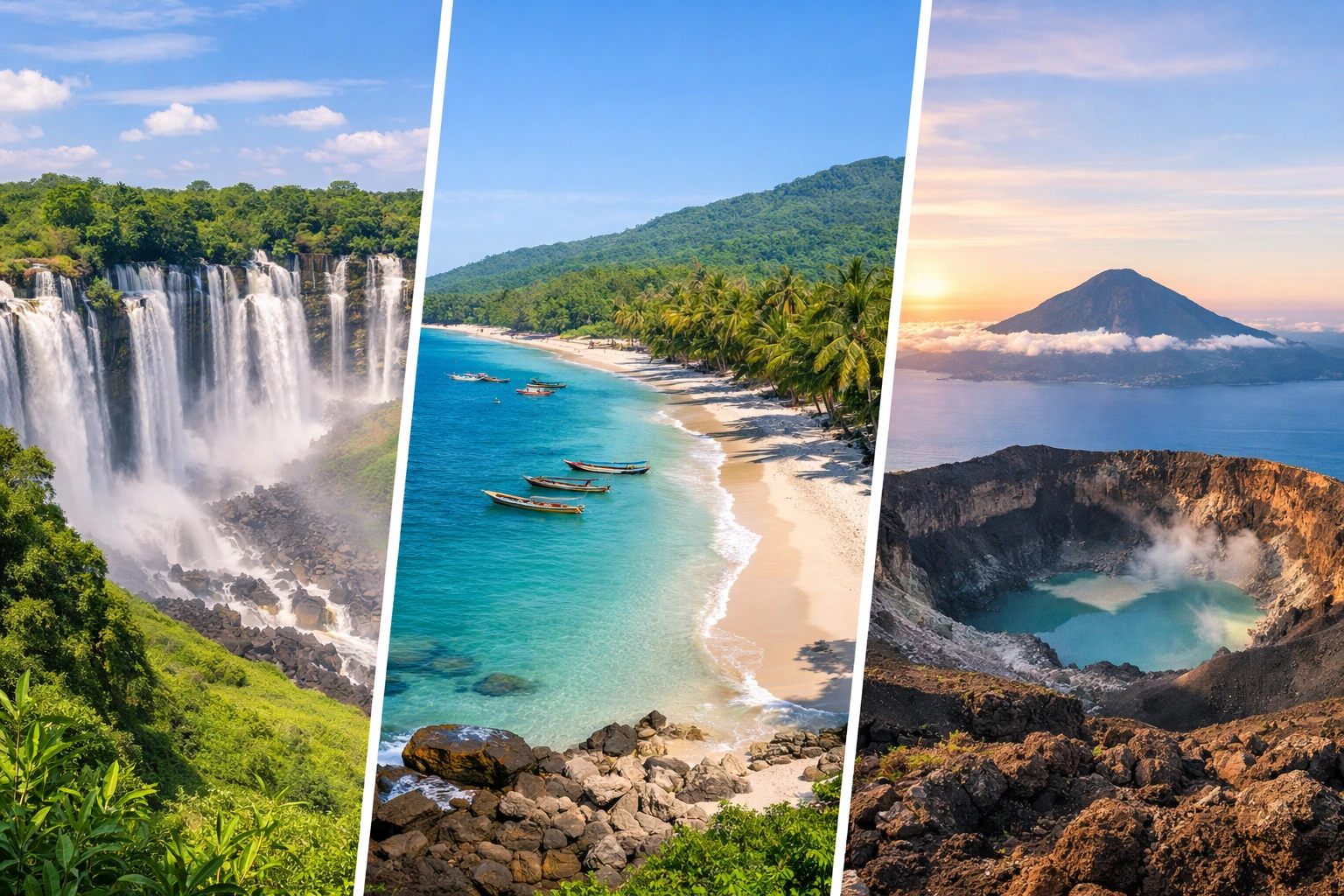
    1. Kalandula Falls

    One of Africa’s largest waterfalls—wider than Victoria Falls during rainy season.
    A breathtaking natural wonder few travelers have seen.


    2. Miradouro da Lua (Moon Viewpoint)

    Dramatic clay cliffs shaped by erosion, resembling a lunar landscape.
    Perfect for sunset photography.


    3. Mussulo Peninsula

    A peaceful stretch of sand near Luanda with calm waters and eco-resorts.


    4. Lubango & Serra da Leba

    Mountain roads, cliffs, and colonial architecture with panoramic views.


    🧭 Best Time to Visit Angola

    May–October
    Dry season with pleasant temperatures.


    ✈️ How to Reach Angola

    Fly into Luanda (LAD) via:

    • Lisbon
    • Doha
    • Addis Ababa

    Domestic flights connect major regions.


    💰 Budget Per Day in Angola

    • Backpacker: $40–55/day
    • Mid-Range: $70–120/day
    • Luxury: $200+/day

    🇸🇱 Hidden Gems in Sierra Leone – Beaches, Islands & Warm Smiles

    Sierra Leone is one of West Africa’s friendliest and most beautiful countries, with palm-lined beaches and rich cultural heritage.


    🗺️ Top Hidden Places in Sierra Leone

    1. Banana Islands

    White-sand beaches, crystal waters, and colonial ruins.
    A peaceful island escape.


    2. Tiwai Island Wildlife Sanctuary

    Home to primates, birds, and rare wildlife.
    Ideal for eco-tourism lovers.


    3. River Number Two Beach

    Often ranked among Africa’s best beaches—yet remains uncrowded.


    4. Freetown Peninsula

    Mountains meet the sea, offering scenic hikes and viewpoints.


    🧭 Best Time to Visit Sierra Leone

    November–April
    Dry season with warm weather and calm seas.


    ✈️ How to Reach Sierra Leone

    Fly into Freetown (FNA) via:

    • Brussels
    • Casablanca
    • Istanbul

    Boat transfers connect the airport to the city.


    💰 Budget Per Day in Sierra Leone

    • Backpacker: $35–50/day
    • Mid-Range: $60–100/day
    • Luxury: $150+/day

    🇰🇲 Hidden Gems in Comoros – Volcanic Islands & Turquoise Seas 🏝️

    Comoros is one of Africa’s best-kept secrets—an archipelago in the Indian Ocean with volcanic peaks and coral reefs.


    🗺️ Top Hidden Places in Comoros

    1. Mount Karthala

    An active volcano with dramatic crater views and hiking trails.


    2. Lac Salé (Salt Lake)

    A mystical crater lake with color-changing water.


    3. Moheli Marine Park

    Whale watching, coral reefs, and sea turtles.
    Perfect for eco-conscious travelers.


    4. Grande Comore Beaches

    Black lava sand beaches with crystal-clear water.


    🧭 Best Time to Visit Comoros

    May–October
    Dry season with lower humidity.


    ✈️ How to Reach Comoros

    Fly into Moroni (HAH) via:

    • Nairobi
    • Addis Ababa
    • Dar es Salaam

    💰 Budget Per Day in Comoros

    • Backpacker: $35–50/day
    • Mid-Range: $70–110/day
    • Luxury: $180+/day

    🗺️ 7–10 Day Suggested Itinerary (Africa Hidden Gems 2026)

    Day 1–3: Angola (Luanda & Kalandula Falls)

    City exploration + waterfalls.

    Day 4–6: Sierra Leone (Freetown & Banana Islands)

    Beach relaxation + wildlife.

    Day 7–10: Comoros (Grande Comore & Moheli)

    Volcano hikes, snorkeling, island life.


    💵 Average Daily Budget Comparison

    CountryBackpackerMid-RangeLuxury
    Angola$40–55$70–120$200+
    Sierra Leone$35–50$60–100$150+
    Comoros$35–50$70–110$180+

    🏨 Where to Stay

    • Angola: Guesthouses, city hotels, eco-lodges
    • Sierra Leone: Beach lodges, boutique hotels
    • Comoros: Eco-resorts, island guesthouses

    Many stays are locally owned, supporting community tourism.


    🔐 Safety Tips for Traveling Africa’s Hidden Gems

    • Stick to daylight travel for remote areas
    • Use registered taxis or local guides
    • Carry copies of important documents
    • Respect cultural and religious customs
    • Travel insurance is strongly recommended

    ❓ FAQs

    1. Are these destinations safe for tourists?

    Yes, with normal travel precautions.

    2. Is Africa expensive to travel?

    These destinations are more affordable than safari-heavy countries.

    3. Do I need vaccinations?

    Check with a travel clinic before departure.

    4. Is English spoken?

    English is common in Sierra Leone; French/Portuguese in Angola and Comoros.

    5. Are these destinations good for solo travelers?

    Yes—especially Sierra Leone and Comoros.


    🌍 Explore More Hidden Gem Travel Guides

    If Africa’s raw beauty inspired you, continue planning your journey with our Ultimate Guide to Hidden Gem Destinations Around the World 2026, where we compare underrated places across continents.

    Travelers who love culture and mountains often explore our Hidden Gems in Europe 2026 Guide, while slow travelers enjoy our Underrated Asian Destinations 2026 Guide featuring Laos, Georgia, and Uzbekistan.

    If affordability is your priority, don’t miss our Ultimate Budget Hidden Gems Under $50/Day (2026)—perfect for backpackers and long-term travelers.

  • 🌏 Underrated Asian Destinations 2026: Laos, Georgia & Uzbekistan ✨

    🌏 Underrated Asian Destinations 2026: Laos, Georgia & Uzbekistan ✨

    Ancient Cultures, Budget Travel & Least Crowded Places in Asia

    Asia is home to some of the world’s most famous destinations—but beyond the crowds of Bali, Bangkok, and Dubai lies a quieter, richer side of the continent. In 2026, smart travelers are choosing underrated Asian destinations that offer ancient history, deep culture, breathtaking landscapes, and incredible value for money.

    Laos, Georgia, and Uzbekistan are three rising stars that remain largely untouched by mass tourism. From serene waterfalls and Buddhist temples to wine valleys and Silk Road cities, these countries deliver unforgettable experiences without crowds or inflated prices. 🌄🕌


    📌 Table of Contents

    1. Why Laos, Georgia & Uzbekistan Are Asia’s Hidden Gems
    2. Hidden Gems in Laos
    3. Hidden Gems in Georgia
    4. Hidden Gems in Uzbekistan
    5. 7–10 Day Suggested Itinerary
    6. Average Daily Budget Breakdown
    7. Best Time to Visit in 2026
    8. How to Reach These Destinations
    9. Where to Stay
    10. Safety Tips for Travelers
    11. FAQs
    12. Explore More Hidden Gem Travel Guides
    13. SEO Metadata
    14. Featured Image Metadata

    🌟 Why Laos, Georgia & Uzbekistan Are Asia’s Hidden Gems in 2026

    ✔ Authentic Culture Without Overtourism

    These countries preserve traditions, architecture, and daily life that haven’t been reshaped for mass tourism.

    ✔ Extremely Budget-Friendly

    Daily travel costs are among the lowest in Asia—perfect for backpackers and slow travelers.

    ✔ Deep History & Spiritual Energy

    From Buddhist temples to ancient Silk Road cities, history feels alive here.

    ✔ Ideal for Slow & Meaningful Travel

    Relaxed pace, friendly locals, and scenic landscapes make these destinations perfect for longer stays.


    🇱🇦 Hidden Gems in Laos – Slow Travel & Spiritual Landscapes

    Laos is one of Southeast Asia’s calmest and most underrated countries. Life moves slowly, nature is pristine, and traditions remain deeply rooted.


    🗺️ Top Hidden Places in Laos

    1. Luang Prabang

    A UNESCO-listed town known for:

    • Golden temples
    • Almsgiving ceremonies
    • French colonial architecture

    A perfect mix of spirituality and culture.


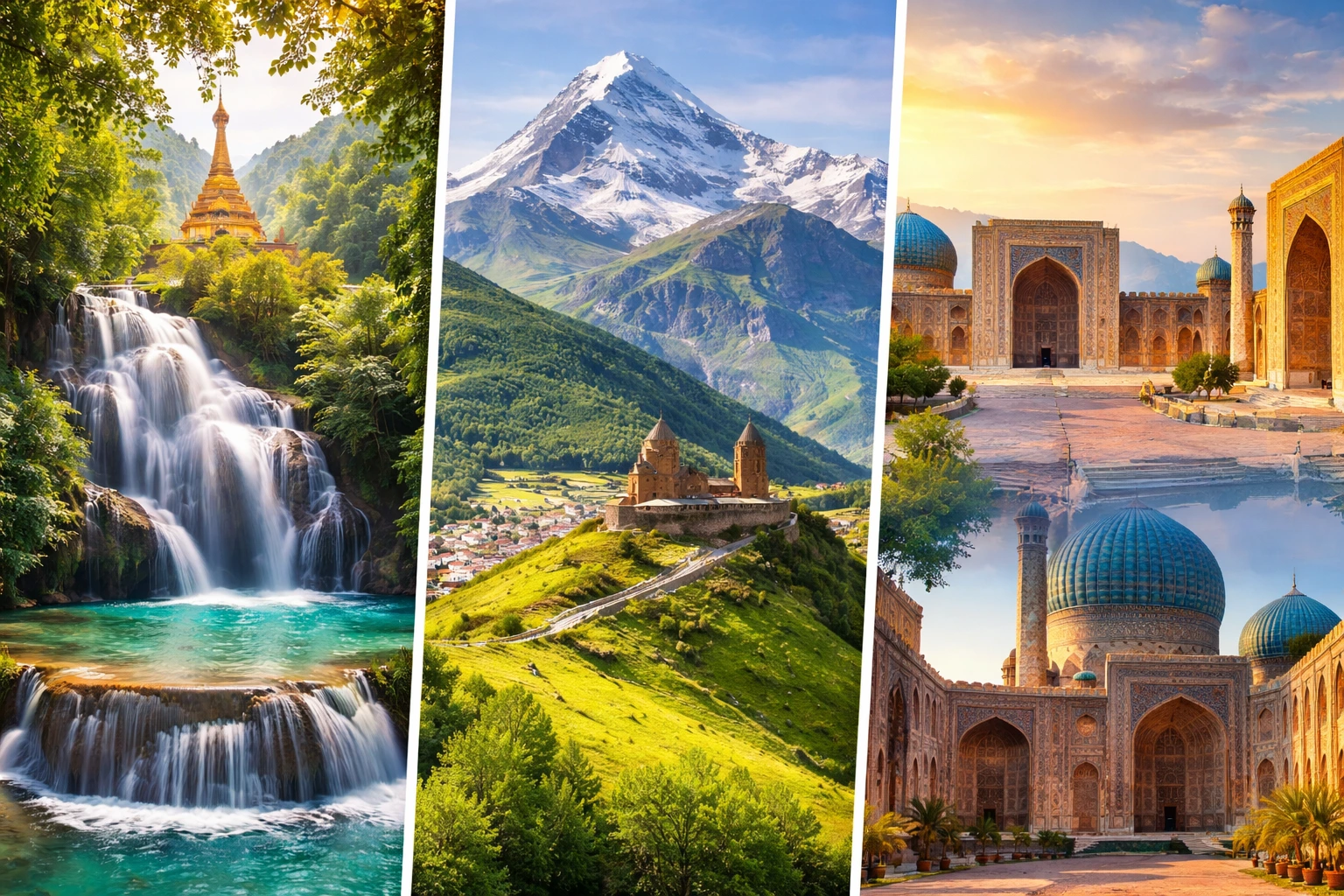
    2. Kuang Si Waterfalls

    Multi-tiered turquoise waterfalls surrounded by jungle.
    Ideal for swimming and photography.


    3. Nong Khiaw

    A peaceful riverside village with dramatic limestone cliffs.
    Great for hiking and sunset viewpoints.


    4. Bolaven Plateau

    Cool climate, coffee plantations, and hidden waterfalls.


    🧭 Best Time to Visit Laos

    November–February
    Dry season with pleasant temperatures.


    ✈️ How to Reach Laos

    Fly into:

    • Vientiane (VTE)
    • Luang Prabang (LPQ)

    Common connections via Bangkok, Hanoi, or Kuala Lumpur.


    💰 Budget Per Day in Laos

    • Backpacker: $25–35/day
    • Mid-Range: $50–80/day
    • Luxury: $120+/day

    🇬🇪 Hidden Gems in Georgia – Mountains, Wine & Medieval Towns 🍷

    Georgia sits at the crossroads of Europe and Asia and offers incredible diversity in a compact area.


    🗺️ Top Hidden Places in Georgia

    1. Kazbegi (Stepantsminda)

    Snow-capped peaks and the iconic Gergeti Trinity Church.
    One of the most scenic places in the Caucasus.


    2. Svaneti Region

    Remote mountain villages with medieval stone towers.
    Feels like stepping back in time.


    3. Kakheti Wine Region

    The birthplace of wine, featuring:

    • Vineyards
    • Traditional clay qvevri wines
    • Cozy guesthouses

    4. Tbilisi Old Town

    Colorful balconies, sulfur baths, and historic streets.


    🧭 Best Time to Visit Georgia

    May–June & September–October
    Perfect for hiking, wine tours, and city exploration.


    ✈️ How to Reach Georgia

    Fly into Tbilisi (TBS) from:

    • Istanbul
    • Dubai
    • Doha
    • European hubs

    💰 Budget Per Day in Georgia

    • Backpacker: $30–45/day
    • Mid-Range: $60–100/day
    • Luxury: $150+/day

    🇺🇿 Hidden Gems in Uzbekistan – Silk Road Cities & Timeless Architecture

    Uzbekistan is a dream for culture lovers. Its Silk Road cities are among the most beautiful in the world—yet remain surprisingly uncrowded.


    🗺️ Top Hidden Places in Uzbekistan

    1. Samarkand

    Famous for:

    • Registan Square
    • Blue-tiled madrasas
    • Timurid architecture

    2. Bukhara

    A living museum city with:

    • Ancient mosques
    • Caravanserais
    • Narrow historic streets

    3. Khiva

    A perfectly preserved walled city straight out of history books.


    4. Nuratau Mountains

    Village homestays, hiking trails, and authentic rural life.


    🧭 Best Time to Visit Uzbekistan

    April–May & September–October
    Comfortable weather for sightseeing.


    ✈️ How to Reach Uzbekistan

    Fly into:

    • Tashkent (TAS)
    • Samarkand (SKD)

    Connections via Istanbul, Dubai, and Doha.


    💰 Budget Per Day in Uzbekistan

    • Backpacker: $25–40/day
    • Mid-Range: $60–90/day
    • Luxury: $140+/day

    🗺️ 7–10 Day Suggested Itinerary (Asia Hidden Gems 2026)

    Day 1–3: Laos (Luang Prabang & Kuang Si Falls)

    Temple visits, waterfalls, river cruises.

    Day 4–6: Georgia (Tbilisi & Kazbegi)

    City walks, mountain views, wine tasting.

    Day 7–10: Uzbekistan (Samarkand & Bukhara)

    Silk Road architecture and cultural immersion.


    💵 Average Daily Budget Comparison

    CountryBackpackerMid-RangeLuxury
    Laos$25–35$50–80$120+
    Georgia$30–45$60–100$150+
    Uzbekistan$25–40$60–90$140+

    🏨 Where to Stay

    • Laos: Guesthouses, eco-lodges
    • Georgia: Family-run hotels, boutique stays
    • Uzbekistan: Traditional courtyard hotels, homestays

    Most accommodations include breakfast and local experiences.


    🔐 Safety Tips for Traveling Asia’s Hidden Gems

    • All three countries are generally safe for tourists
    • Dress modestly at temples and religious sites
    • Carry cash in rural areas
    • Use registered taxis or ride apps
    • Respect local customs and traditions

    ❓ FAQs

    1. Are these destinations good for first-time Asia travelers?

    Yes—especially Laos and Georgia.

    2. Is English widely spoken?

    English is common in tourist areas and among younger locals.

    3. Are visas required?

    Many nationalities receive visa-free or e-visa access.

    4. Can I travel here on a low budget?

    Absolutely—these are some of Asia’s most affordable destinations.

    5. Is Wi-Fi reliable?

    Good in cities; limited in remote villages.


    🌍 Explore More Hidden Gem Travel Guides

    If you enjoyed discovering Asia’s lesser-known destinations, continue your journey with our Ultimate Guide to Hidden Gem Destinations Around the World 2026, where we compare underrated places across continents.

    For travelers drawn to mountains and old towns, our Hidden Gems in Europe 2026 Guide explores Armenia, Albania, and Montenegro in depth.
    Adventure seekers can head next to our Off-the-Beaten-Path Africa 2026 Guide, featuring Angola, Sierra Leone, and Comoros.
    And if affordability is your priority, don’t miss our Ultimate Budget Hidden Gems Under $50/Day (2026)—perfect for backpackers and digital nomads.