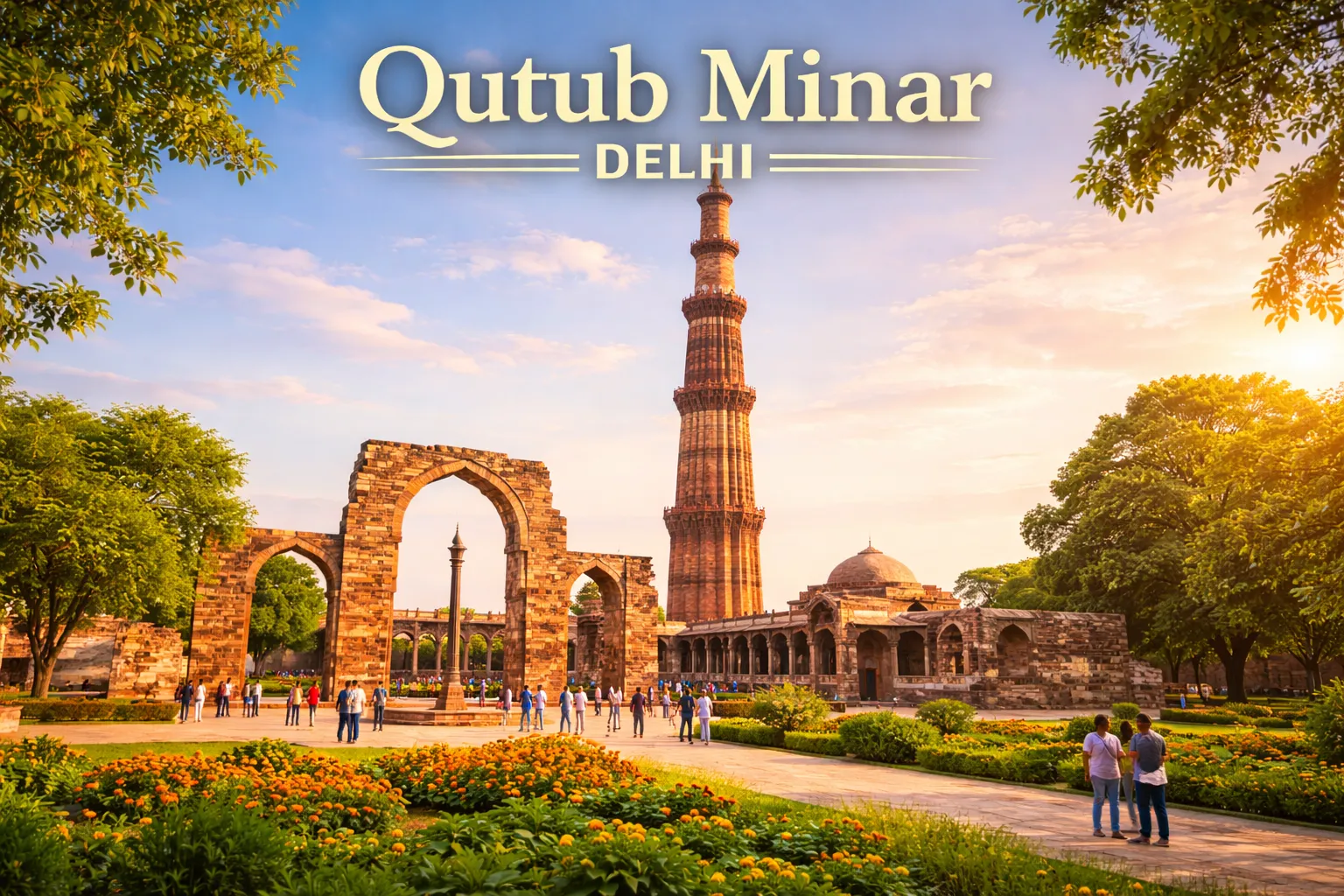
India’s Tallest Brick Minaret & a UNESCO World Heritage Site
Qutub Minar, located in Mehrauli, South Delhi, is one of India’s most iconic historical monuments and a shining example of Indo-Islamic architecture. Rising to a height of 73 meters, this majestic minaret has stood for over 800 years and continues to fascinate visitors from around the world.
Part of the Qutub Complex, the monument is surrounded by ancient mosques, tombs, and inscriptions, making it one of the most important heritage sites in Delhi.
📌 Table of Contents
- Why Visit Qutub Minar
- About Qutub Minar
- History & Cultural Significance
- Architecture & Design Highlights
- Monuments Inside the Qutub Complex
- Best Time to Visit
- Qutub Minar Timings
- Entry Tickets & Charges
- How to Reach Qutub Minar
- Visitor Tips & Rules
- Suggested Visit Plan
- FAQs
- Explore More Delhi Travel Guides
🌟 Why Visit Qutub Minar
- ✔ UNESCO World Heritage Site
- ✔ Tallest brick minaret in the world
- ✔ Rich Islamic & Indian architectural details
- ✔ Beautiful gardens and ruins
- ✔ Perfect for photography & learning 📸
Qutub Minar is a must-visit to understand Delhi’s early medieval history.
🏛️ About Qutub Minar
Qutub Minar is part of a larger historical complex built during the Delhi Sultanate period.
Key Facts:
- Location: Mehrauli, South Delhi
- Height: ~73 meters
- Construction started: 1193
- Built by: Qutb-ud-din Aibak
- Completed by: Iltutmish
The monument is made of red sandstone and marble.
📜 History & Cultural Significance
- Construction began after the establishment of Muslim rule in Delhi
- Built to celebrate victory and mark the beginning of a new era
- Renovated and repaired by later rulers after lightning damage
The minaret has survived earthquakes and centuries of change, standing as a symbol of Delhi’s layered history.
🏗️ Architecture & Design Highlights
Qutub Minar is admired for its intricate craftsmanship.
Architectural Features:
- Five distinct storeys
- Each storey has a projecting balcony
- Carved Quranic inscriptions
- Alternating angular and circular flutings
The detailing becomes finer as the structure rises upward.
🏛️ Monuments Inside the Qutub Complex
Besides Qutub Minar, the complex includes:
🕌 Quwwat-ul-Islam Mosque
- One of the earliest mosques in India
🧲 Iron Pillar
- Over 1,600 years old
- Famous for not rusting
🪦 Tomb of Iltutmish
- Beautiful stone carvings
🏰 Ala’i Minar (unfinished)
- Intended to be taller than Qutub Minar
These structures make the complex a complete historical experience.
🗓️ Best Time to Visit Qutub Minar
✔ Best Months
- October to March – pleasant weather
✔ Best Time of Day
- Early morning
- Late afternoon for golden-hour photos 🌅
❌ Avoid
- Hot summer afternoons
- Peak holiday crowds if you prefer quiet visits
⏰ Qutub Minar Timings
- Open: Daily
- Timings:
- Sunrise to Sunset
Timings may vary slightly by season.
🎟️ Entry Tickets & Charges (Approx.)
- Indian Citizens: ₹40
- Foreign Tourists: ₹600
- Children below 15: Free
Tickets available online and at the entrance.
🚇 How to Reach Qutub Minar
🚆 By Metro (Best Option)
- Qutub Minar Metro Station (Yellow Line)
- Short auto or walk from the station
🚕 By Cab / Auto
- Easily accessible from South & Central Delhi
🚶 Nearby Attractions
- Mehrauli Archaeological Park
- Chhatarpur Mandir
- Hauz Khas
👮 Visitor Tips & Rules
- Photography allowed (no drones)
- Do not climb restricted areas
- Carry water in summer
- Wear comfortable shoes
- Respect heritage structures
Security and guides are available inside the complex.
🗺️ Suggested Visit Plan (1.5–2 Hours)
First 45 Minutes:
- Qutub Minar and Iron Pillar
Next 30 Minutes:
- Mosque & Iltutmish’s Tomb
Optional:
- Walk around landscaped gardens
❓ FAQs
Is Qutub Minar a UNESCO site?
Yes, it is a UNESCO World Heritage Site.
Is photography allowed?
Yes, for personal use.
How much time is enough?
1.5–2 hours is ideal.
Is Qutub Minar safe for families?
Yes, very family-friendly.
Is night visit allowed?
Occasionally during special events.
🌍 Explore More Delhi Travel Guides
After visiting Qutub Minar, explore nearby attractions like Mehrauli Archaeological Park, Chhatarpur Mandir, and Hauz Khas.
Continue your heritage journey with Humayun’s Tomb, Red Fort, and Jama Masjid, or relax at Lodhi Garden. Families may enjoy National Zoological Park and Nehru Planetarium.
Leave a Reply