India’s Largest Mosque & a Timeless Symbol of Mughal Grandeur
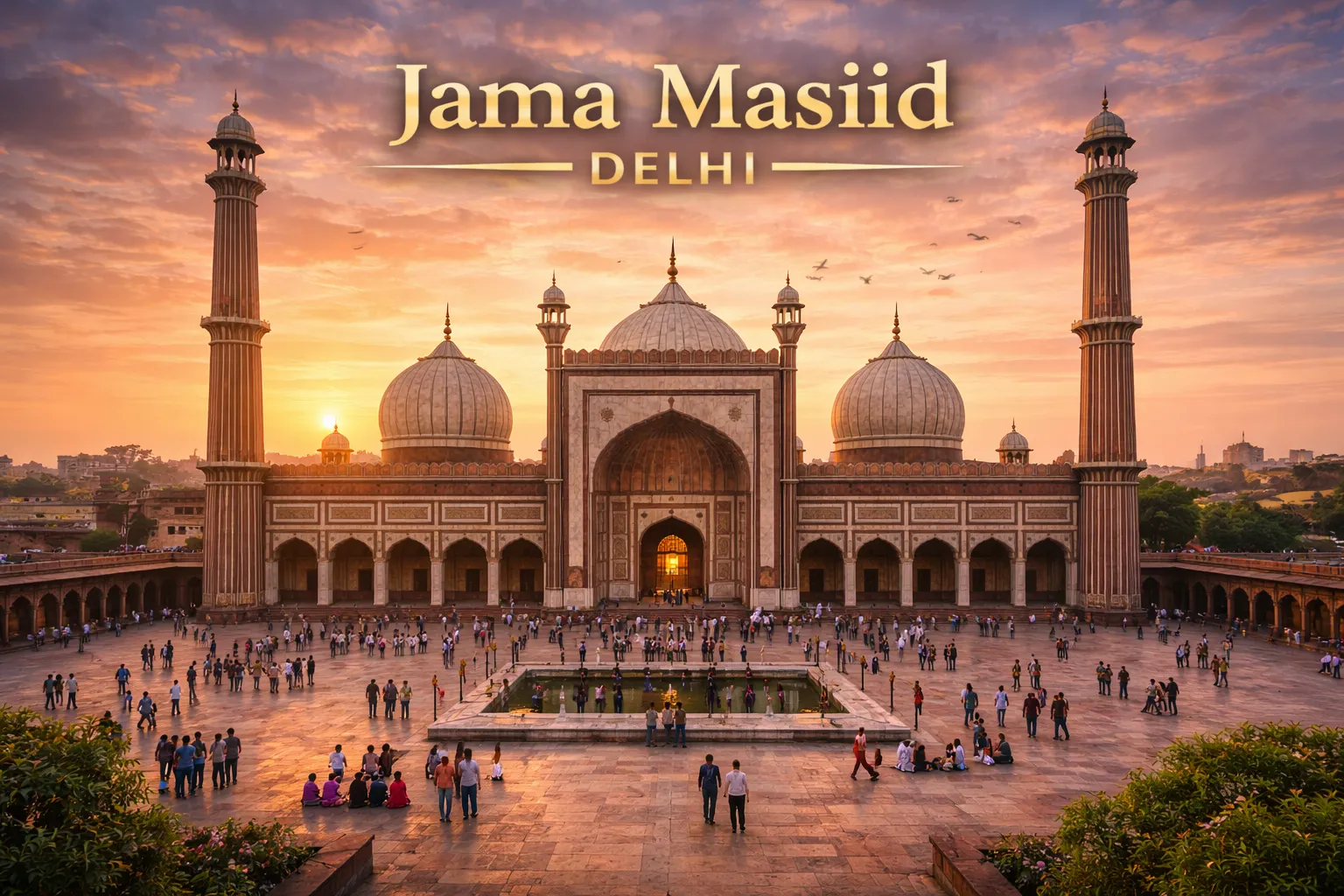
Jama Masjid, located in the heart of Old Delhi, is one of the largest and most magnificent mosques in India. Built by Mughal Emperor Shah Jahan, the mosque stands as a powerful reminder of India’s rich Islamic heritage, architectural brilliance, and spiritual traditions.
With its massive courtyards, elegant minarets, red sandstone walls, and white marble domes, Jama Masjid attracts devotees, historians, photographers, and travelers from around the world.
📌 Table of Contents
- Why Visit Jama Masjid
- About Jama Masjid
- History & Religious Significance
- Architecture & Design Highlights
- Courtyard, Minarets & Prayer Hall
- Best Time to Visit
- Jama Masjid Timings
- Entry Fee & Camera Charges
- How to Reach Jama Masjid
- Dress Code, Rules & Etiquette
- Things to Do Around Jama Masjid
- FAQs
- Explore More Delhi Travel Guides
🌟 Why Visit Jama Masjid
- ✔ Largest mosque in India
- ✔ Built by Shah Jahan, the Mughal emperor
- ✔ Stunning Mughal architecture
- ✔ Deep spiritual atmosphere
- ✔ Located in vibrant Old Delhi
It’s a must-visit landmark to understand Delhi’s history, faith, and living culture.
🏛️ About Jama Masjid
Jama Masjid is officially known as Masjid-i-Jahan-Numa, meaning “Mosque that reflects the world.”
Key Facts:
- Location: Old Delhi (near Chandni Chowk)
- Built by: Emperor Shah Jahan
- Construction completed: 1656
- Capacity: Over 25,000 worshippers
- Entry: Open to all religions
📜 History & Religious Significance
- Construction began in 1650
- Built using red sandstone and white marble
- Served as the principal mosque of Mughal Delhi
For centuries, Jama Masjid has been a center of Islamic worship, learning, and community gatherings, especially during Friday prayers, Eid-ul-Fitr, and Eid-ul-Adha.
🏗️ Architecture & Design Highlights
Jama Masjid is a masterpiece of Mughal architecture.
Architectural Features:
- Three large white marble domes
- Two towering minarets (40 meters high)
- Vast open courtyard
- Ornate arches and calligraphy
The mosque’s symmetry and scale leave a lasting impression.
🕌 Courtyard, Minarets & Prayer Hall
🧱 The Courtyard
- One of the largest mosque courtyards in the world
- Can accommodate thousands of devotees
- Peaceful despite surrounding chaos
🗼 Minarets
- Visitors can climb one minaret
- Offers panoramic views of Old Delhi (narrow stairs)
🛐 Prayer Hall
- Beautiful mihrab and marble flooring
- Reserved for prayers—maintain silence
🗓️ Best Time to Visit Jama Masjid
✔ Best Months
- October to March – comfortable weather
✔ Best Time of Day
- Early morning
- Late afternoon (before sunset)
❌ Avoid
- Prayer times if you are not attending prayers
- Extremely crowded festival hours unless you want the experience
⏰ Jama Masjid Timings
- Open: Daily
- Timing:
- Morning: Around 7:00 AM
- Evening: Till 6:30 PM
Entry may be restricted briefly during prayer times.
🎟️ Entry Fee & Camera Charges
- Entry: Free
- Camera Fee: Approx. ₹300 (subject to change)
- Minaret Access: Small fee may apply
No compulsory charges—donations are voluntary.
🚇 How to Reach Jama Masjid
🚆 By Metro (Best Option)
- Jama Masjid Metro Station (Violet Line)
- Chandni Chowk Metro Station (Yellow Line)
🚕 By Auto / Rickshaw
- Narrow lanes—cycle rickshaws are common
🚶 Nearby Landmarks
- Red Fort
- Chandni Chowk
- Meena Bazaar
👗 Dress Code, Rules & Etiquette
- Modest clothing required
- Shoulders and legs must be covered
- Head covering recommended
- Shoes must be removed
- Photography restricted in prayer areas
Robes are available on rent at the entrance if needed.
🏪 Things to Do Around Jama Masjid
- Explore Chandni Chowk street food 🍽️
- Visit Meena Bazaar
- Walk to Red Fort
- Try Old Delhi delicacies like kebabs and biryani
It’s perfect for combining heritage + food exploration.
❓ FAQs
Is Jama Masjid open to non-Muslims?
Yes, visitors of all religions are welcome.
Is photography allowed?
Yes, with camera fee (rules may vary).
Can women visit Jama Masjid?
Yes, with proper dress code.
How much time is enough?
1–1.5 hours is sufficient.
Is Jama Masjid safe for tourists?
Yes, but be mindful of crowds and belongings.
🌍 Explore More Delhi Travel Guides
After Jama Masjid, explore Red Fort, Raj Ghat, and India Gate to continue your heritage journey.
For spiritual exploration, visit Gurdwara Bangla Sahib, Lotus Temple, and Dargah Hazrat Nizamuddin Aulia. Families may enjoy National Zoological Park and Nehru Planetarium.
Leave a Reply to Chandni Chowk Delhi – Street Food, Markets & Travel Guide – TouristicHub.com Cancel reply