Delhi’s Icon of Peace, Silence & Universal Faith
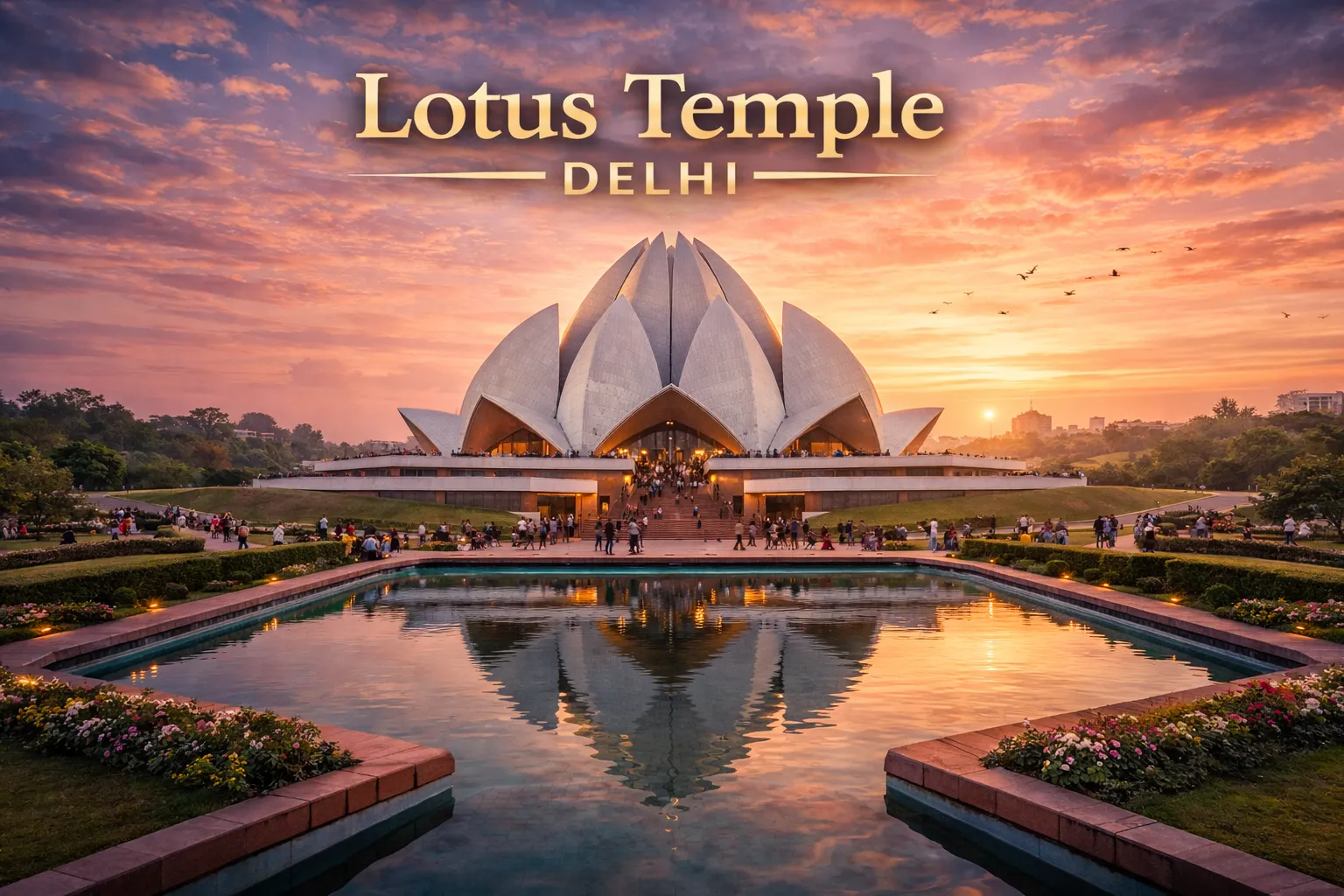
The Lotus Temple, located in South Delhi, is one of India’s most unique and globally admired landmarks. Famous for its lotus-shaped white marble architecture, this Bahá’í House of Worship symbolizes peace, unity, and harmony among all religions.
Open to people of all faiths, backgrounds, and nationalities, the Lotus Temple is not a place of rituals—but a space for silent prayer, meditation, and reflection. It is one of the most visited buildings in the world, attracting millions of visitors every year.
📌 Table of Contents
- Why Visit Lotus Temple
- About the Lotus Temple
- History & Spiritual Significance
- Architecture & Design Highlights
- What to Expect Inside
- Best Time to Visit
- Lotus Temple Timings
- Entry Rules & Dress Code
- How to Reach Lotus Temple
- Visitor Tips for a Peaceful Experience
- Nearby Attractions to Explore
- FAQs
- Explore More Delhi Travel Guides
🌟 Why Visit Lotus Temple
- ✔ One of the most visited monuments in the world
- ✔ Open to people of all religions and beliefs
- ✔ Stunning lotus-inspired architecture 🌸
- ✔ Peaceful environment for meditation
- ✔ Free entry and centrally accessible
It’s a place to slow down, breathe, and reconnect with inner calm.
🏛️ About the Lotus Temple
The Lotus Temple is a Bahá’í House of Worship, following the Bahá’í faith’s principle of unity of all religions and humanity.
Key Facts:
- Location: Kalkaji, South Delhi
- Religion: Bahá’í Faith
- Opened to public: 1986
- Architect: Fariborz Sahba
- Material: White marble from Greece
📜 History & Spiritual Significance
The Bahá’í faith teaches that all major religions come from the same divine source. The Lotus Temple reflects this belief by welcoming everyone, regardless of faith.
There are no idols, sermons, or rituals inside—only silence, prayer, and reflection.
The lotus flower, sacred in many cultures, represents purity, hope, and unity, making it a universal symbol.
🏗️ Architecture & Design Highlights
The Lotus Temple is internationally celebrated for its design.
Architectural Features:
- 27 free-standing marble petals
- Arranged in clusters of three
- Nine entrances (symbol of unity)
- Surrounded by landscaped gardens and pools
The temple looks different throughout the day as sunlight reflects off its marble surface.
🤍 What to Expect Inside the Lotus Temple
- Silent prayer hall
- Seating for meditation
- Natural light filtering through petals
- No religious symbols or speeches
Visitors are expected to maintain complete silence inside the hall.
🗓️ Best Time to Visit Lotus Temple
✔ Best Months
- October to March – pleasant weather
✔ Best Time of Day
- Early morning for peace
- Late afternoon for soft light & photography
❌ Avoid
- Peak summer afternoons
- Weekend afternoons if you dislike queues
⏰ Lotus Temple Timings
- Open Days: Tuesday to Sunday
- Closed: Monday
🕘 Timings
- Summer: 9:00 AM – 7:00 PM
- Winter: 9:30 AM – 5:30 PM
Timings may vary slightly during holidays.
🚫 Entry Rules & Dress Code
- Entry is free
- Shoes must be removed before entering
- Dress modestly
- No photography inside the prayer hall
- Silence must be maintained
- No food or electronic devices inside
Security checks are mandatory.
🚇 How to Reach Lotus Temple
🚆 By Metro
- Kalkaji Mandir Metro Station (Violet & Magenta Line)
- 10-minute walk
🚕 By Cab / Auto
- Easily accessible via Ola, Uber, and autos
🚶 Nearby Landmark
- Nehru Place
- Kalkaji Mandir
💡 Visitor Tips for a Peaceful Experience
- Visit early to avoid long queues
- Carry water in summer
- Be patient—entry is regulated for silence
- Combine visit with nearby attractions
Respect the atmosphere—it’s a place of silence.
🏛️ Nearby Attractions to Explore
After visiting the Lotus Temple, you can explore:
- Kalkaji Mandir
- Akshardham Temple (short metro ride)
- Humayun’s Tomb
- Dargah Hazrat Nizamuddin Aulia
❓ FAQs
Is Lotus Temple a Hindu temple?
No, it is a Bahá’í House of Worship.
Can people of all religions visit?
Yes, everyone is welcome.
Is photography allowed inside?
No, photography is not allowed inside the prayer hall.
How much time is enough?
1–1.5 hours is sufficient.
Is there an entry fee?
No, entry is free.
🌍 Explore More Delhi Travel Guides
After visiting the Lotus Temple, deepen your spiritual journey with Gurdwara Bangla Sahib, Akshardham Temple, and Dargah Hazrat Nizamuddin Aulia.
History lovers can explore India Gate, Raj Ghat, and National Museum, while families may enjoy National Zoological Park and Nehru Planetarium.
Leave a Reply